


What is unfairly prejudicial conduct entitling a shareholder to relief from the Court – and are such claims indemnified under the company’s D&O Policy?
Successive versions of the Companies Act (most recently Section 994 of the 2006 Act (“CA 2006”)) have provided protection and relief for minority shareholders against unfairly prejudicial conduct of the company’s affairs by majority/controlling shareholders and the board of directors.
However, the petitioning shareholder has the burden of establishing such conduct.
The recent case of Re Cardiff City Football Club (Holdings) Ltd [2022] EWHC 2023 (Ch) (summarised below) emphasises that (i) even if a majority shareholder’s conduct is vindictive, unpleasant or morally unfair, it does not always follow that it will be classed as unfairly prejudicial and (ii) the conduct of a majority shareholder, even if unfairly prejudicial, must be within the affairs of the company itself, and not merely carried out in his or her personal capacity.
Background
Mr Issac was a minority shareholder in Cardiff City Football Club (Holdings Limited) (“the Company”) which is the holding company of Cardiff City Football Club (“the Football Club”). He brought a petition against Vincent Tan and the Football Club on the grounds that Company’s affairs had been conducted in a prejudicial manner. The claim related to an open offer of shares made by the Company following a board resolution in May 2018. Mr Tan was the majority shareholder of the Company who before the offer of shares owned 94.22% of the issued shares. No other shareholders took up the offer of shares. This increased Mr Tan’s shareholding to 98.3% and Mr Issac’s was reduced from 3.97% to 1.18%.
Mr Issac argued that this dilution was prejudicial because the value of his shares was diminished. He argued that the whole offer was arranged by Mr Tan due to his animosity to Mr Issac rather than for any proper commercial purpose. Whilst the Board of Directors approved the offer, Mr Issac contended that it had merely “rubber stamped” Mr Tan’s decision, in breach of Section 173 of the CA 2006, which requires directors to exercise their own independent judgment, and of Section 171 of the CA 2006, which requires an allotment of new shares to be for a proper purpose.
Mr Tan denied these allegations. He argued that he provided consideration for the new shares issued to him by agreeing to write off £67 million which was owed to him by the Company. Therefore, Mr Tan argued there was a good commercial purpose behind the offer - which improved the Company’s balance sheet - and it was not because of any animosity towards Mr Issac. and that the directors had exercised their allotment power for a proper purpose.
Mr Issac sought an order that Mr Tan should buy his shareholding for a fair value. He sought an order for sale on the basis of a 3.97% shareholding as opposed to a 1.18% shareholding.
Decision
In deciding whether there was any unfair prejudice, the Court asked the following three questions:
- Was Mr Tan's conduct the conduct of the Company’s affairs?
- Did the directors act independently?
- Did the directors act for a proper purpose?
Was Mr Tan's conduct the conduct of the Company’s affairs?
The Court answered that question in the negative.
Mr Issac argued that Mr Tan used his position as a majority shareholder to put pressure on the Board to give in to his demands. However, the Court held that this could not be seen as conduct of the Company because these acts were a personal or a private act. The Court cited Re Unisoft Group Ltd (No. 3) [1994] 1 BCLC to distinguish between the acts or conduct of a company and the acts of a shareholder in his private capacity. The Court held Mr Tan was entitled “qua” shareholder and creditor to exert commercial pressure and act in his own interests.
The Court acknowledged that Mr Tan did have personal animosity to Mr Issac, which was part of the reason he made the open offer of shares, and that his conduct was vindictive and unpleasant.
However, the Court held that there was nothing unlawful or unconscionable in Mr Tan's actions, and that what he did was unfair in a moral but not in a legal sense. There was no Shareholders' Agreement, and no provisions in the Articles of Association had been infringed. Accordingly, there was no breach of anything referable to the affairs of the Company.
The mere fact that respondents have caused prejudice to the petitioner does not always mean there has been unfairness. So, where two companies were always run as a single unit in disregard of the constitutional formalities of both of them, but with the acquiescence and knowledge of the petitioners, there was prejudice, but no unfairness (Jesner v Jarrad Properties [1992] BCC 807)
Conversely, conduct by those in control of the company may be unfair and reprehensible but not prejudicial. So, where directors entered into transactions pursuant to which (despite obvious conflicts of interest) they purchased company assets, this was unfair but no section 994 remedy was granted, as the price paid by the directors was not less than the company would have obtained from an arm’s length purchaser (Rock Nominees Limited v RCO (Holdings) Plc (In Liquidation) [2004] 1 BCLC 439 CA).
Did the directors act independently?
The Court held that the directors did act independently. There was a justifiable commercial rationale for what the Board was being asked to do. Board minutes were prepared in advance of the meeting, but there was nothing inherently wrong with that, so long as the Board had the opportunity to take its own view as the meeting developed.
Did the directors act for a proper purpose?
The Court decided that the directors did act for a proper purpose.
The Court cited Howard Smith v Ampol Petroleum [1974] AC 821, which held it would be "too narrow an approach to say that the only valid purpose for which shares may be issued is to raise capital for the company".
The allotment of the shares was deemed as being for a proper purpose, namely clearing debt owed to Mr Tan. This would improve the Company's balance sheet and provide greater financial stability.
Therefore, the Court concluded that there was no unfair prejudice.
Impact on D&O Policyholders
Directors’ and Officers’ (D&O) policies will usually respond if there has been a claim made for a wrongful act by a director, provided the director has been acting in that capacity (rather than as a shareholder). The policy will likely provide indemnity or defence costs of any director against such allegations, which is important protection as such costs cannot lawfully be met by the company.
However, in this case, because Mr Tan was held to have been acting in a personal capacity (rather than as a director in the conduct of the Company’s affairs), his costs are unlikely to have been indemnified under the Company’s D&O policy.
Ironically, the very grounds relied upon by Mr Tan and the nature of the Company’s defence would themselves have excluded the right to indemnity for defence costs under the policy, and the directors would have to seek reimbursement of costs from the unsuccessful petitioner.
This case serves as a reminder that personal acts of directors, outside the scope of their directorial duties, cannot be relied upon in claims for minority shareholder relief, and nor will they be indemnified under the company’s D&O policy, if the subject of third-party claims.
Authors
Michael Robin, Partner
Ayo Babatunde, Associate


The End of Days, or Just the Beginning? Current AI use
It’s seemingly the only thing anyone can talk about. It is hard to go to any conference, panel discussion or networking event without someone paying it lip service. And most cyber articles, opinion pieces or business plans contain some nebulous reference to it. Artificial Intelligence (“AI”) is certainly the flavour of the month. But what it is, how is it used and what does it mean for us all? This article will look at the development of AI and hopefully alleviate concerns by demonstrating how it has been part of our everyday lives for some time.
Part of the problem is that most definitions of AI are either too complicated or too broad. One with which most people work is something along the lines of “AI is a computer’s ability to perform the cognitive functions or abilities that we usually associate with the human mind”. This tends to make people think of HAL from 2001: A Space Odyssey or the more recent example of ChatGPT. But AI elements are far more ingrained in our lives than science fiction or Large Language Models. Regardless of how we view AI, it is very much present in our everyday world; whether in the personal space of helping to enable safer online payments, or travelling to work through our smartphones, to offering greater efficiency for businesses and their clients through automation and autonomy.
Although the history of AI can be traced back to 1950 – for example, Alan Turing’s paper entitled ‘Computing Machinery and Intelligence’ [1] – for present purposes it makes sense to start in the late 1970s. The 1950s to mid-1970s were a time of great advancement for AI but (like ordinary computers) they had less impact on everyday lives. The emergence of arcade games in the late 1970s can be viewed as perhaps the earliest widespread societal engagement with AI. Games like Pong, Space Invaders and Pacman may not be what spring to mind when we think of AI, but the way in which the computer responded in real time to the player’s actions can certainly be considered as artificially intelligent gameplay. Similarly, the 1997 defeat of Gary Kasparov, chess world champion, by IBM’s ‘Deep Blue’ AI system has been viewed as a milestone in the history of AI. At the time, there was widespread unease that a computer had defeated one of humanity’s great intellectual champions.
In the grand scheme of things, however, AI in the 20th century was far more widespread in popular culture than in everyday life. After 2001: A Space Odyssey, films like Star Wars, Alien, Blade Runner, The Terminator, RoboCop and The Matrix had great impact in shaping society’s (mis)understanding about AI. The dystopian sci-fi genre of cinema has perhaps been the single biggest contributor to the concern and fear around the technology. Most of the stories in these films centre around the concept of computers ‘taking over’ and subduing humanity. This unhelpfully incepted ideas about the scope and purpose of AI in the popular conscience, despite the fact that the grand narratives were entirely fictitious.
In reality, AI deployment is more nuanced, precise and limited. While the potential of the technology is astounding, the current everyday uses of AI are surprisingly narrow (meaning task-specific) albeit certainly widespread. If you unlock your smartphone with facial recognition, you use AI several times a day. If you have predictive text enabled on texts or emails, you use AI whenever you are drafting. When you use maps on your phone to navigate a car or public transport journey, the real time traffic and transport updates are analysed and evaluated by AI to assess the swiftest route. If you call a service provider and speak to an automated voice – that’s AI. If you engage with a customer chatbot – that’s AI too. If you have social media and engage with suggested posts/videos, the AI algorithms that show the content have prioritised posts based on previous ‘likes’, your location, wider online activity and user demographic. Similarly, if you use Spotify or Apple Music, AI assesses your music taste and playlists and creates a track list in a similar vein.
In business, if your company does not use AI, it is almost certain that one of your service providers does. For example, while London-based law firms are unlikely to develop their own AI software, it is highly likely that their disclosure providers use AI in document review and processing. And in healthcare, it is highly likely your local hospital is using AI, given that NHS Trusts use AI to analyse X-ray images to support radiologists make assessments. AI is also used to assist clinicians with interpreting brain scans. Whenever you fly on a plane, air traffic control systems log your flight data and use it to feed AI systems that aid efficiency in air traffic management. And in the military, AI has been used in autonomous ground vehicles and unmanned drones and it assists in the prevention of cyber warfare. Even the food you eat may have been produced with the assistance of AI, given that sophisticated farms use AI and drones to analyse soil health, crop health and yield potential, thereby applying fertilisers and water more precisely – which optimises resource use and minimises environmental impact. In short, AI has permeated consumer life, healthcare, travel, defence and agriculture in ways that may not have been realised by the man on the Clapham omnibus but are highly unlikely to be reversed.
So AI is here to stay. But it is not omnipotent, and it is not yet omnipresent. It’s been around for far longer than ChatGPT although has had more targeted deployment than people tend to think. And you’re likely using it every day. While we can’t say for sure how the technology will develop, it’s not a future discussion: it’s already happening. AI has almost certainly improved efficiency and ease in your life and hasn’t locked the pod bay doors just yet.
This is the first in a series of articles about AI by Dru Corfield and Dr Joanne Cracknell.
Dru Corfield is an Associate at Fenchurch Law and inaugural committee member of the City of London Law Society’s AI Committee. Fenchurch Law was the first law firm in the UK to focus exclusively on representing policyholders in coverage disputes with their insurers and is top-ranked by both Legal 500 and Chambers.
Dr Joanne Cracknell is a Director in the Legal Services PI Team, Global FINEX, WTW. E: joanne.cracknell@wtwco.com W: https://www.wtwco.com/en-gb/solutions/services/legal-services-practice
WTW (Willis Towers Watson) is a global insurance broker, multidisciplinary consultancy, and risk advisor with a mission to empower companies amidst rapid change
[1] Source: Turing, Alan M. (1950). Computing machinery and intelligence. Mind 59 (October): 433-60.

Risk, Regulation and Rewards: Regulatory Developments in Artificial Intelligence
With the Government’s White Paper consultation – “A pro-innovation approach to AI regulation” – having closed at the end of June, and the UK scheduled to host the first global summit on AI regulation at Bletchley Park in early November, now is an appropriate time to assess the regulatory lay-of-the-land in relation to this nascent technology.
White Paper
The White Paper was originally published on 29 March 2023. It sets out a roadmap for AI regulation in the UK, focusing on a “pro-innovation” and “context-specific” approach based on adaptability and autonomy. To this end, the Government did not propose any specific requirements or rules (indeed, the White Paper does not give a specific definition of AI), but provided high-level guidance, based on five ‘Principles’:
- Safety, security and robustness;
- Appropriate transparency and explainability;
- Fairness;
- Accountability and governance;
- Contestability and redress.
The White Paper is, in essence, an attempt to control the use of AI but not so overbearingly as to stifle business or technological growth. Interestingly, the proposals will not create far-reaching legislation to impose restrictions and limits on the use of AI, but rather empower regulators (such as the FCA, CMA, ICO and PRA) to issue guidance and potential penalties to their stakeholders. Perhaps surprisingly, the application of the Principles will be at the discretion of the various regulators.
Motives
The White Paper is markedly different to the EU’s draft AI Act, which takes a more conservative and risk-averse approach. The proposed EU legislation is detail and rule heavy, with strict requirements for the supply and use of AI by companies and organisations.
It would appear that the Government is keen on demonstrating a market-friendly approach to AI regulation, in an effort to draw investment and enhance the UK’s AI credentials. The Government wants the UK to be at the forefront of the AI landscape, and there are understandable reasons for that. The White Paper excitedly predicts that AI could have “as much impact as electricity or the internet”. Certainly the AI sector already contributes nearly £4 billion to the UK economy and employs some 50,000 people.
And the UK does have pedigree in this field – Google DeepMind (a frontier AI lab) was started in London in 2010 by three UCL graduates. The Government is optimistically throwing money at the situation, having already made a £900 million commitment to development compute capacity and developing an exascale supercomputer in the UK. Furthermore, the Government is increasing the number of Marshall scholarships by 25%, and funding five new Fulbright scholarships a year. Crucially, these new scholarships will focus on STEM subjects, in the hope of cultivating the Turings of tomorrow.
Ignorantly Pollyannish?
It all seems like it could be too good to be true. And in terms of regulation, it very well may be. The UK approach to AI regulation is intended to be nimble and able to react pragmatically to a rapidly evolving landscape, but questions arise about the devolved responsibility of various regulators. The vague and open-ended Principles may well prove difficult to translate into meaningful, straightforward frameworks for businesses to understand, and in any event are subjective to the individual regulator. It is unclear what would happen where a large company introduces various AI processes to its business functions but is subject to the jurisdiction of more than one regulator. How would there be a consistent and coordinated approach, especially given that some regulators have far more heavy-handed sanction/punishment powers than others? The Government does intend to create a central function to support the proposed framework, but given that the central function is likely over 18 months away, any dispute/contradiction between regulators before its implementation is going to be a can of worms. Furthermore, when it does arrive, is having a centralised, authoritative Government body to deal with AI not in complete contradiction to the desired regulator-led, bottom-up approach?
And with every day that passes, AI becomes more powerful, sophisticated and complex. It could be the case that all discussions of AI regulation are irrelevant, as there is no way for governments and international organisations to control it. While this risks slipping into a catastrophising and histrionic “AI will end humanity” narrative, it is certainly hard to see how regulation can keep pace with the technology. Consider the difficulty that governments and international organisations have had in regulating ‘Big Tech’ and social media companies in the past two decades, given their (predominately) online presence and global ambit, and then consider how much more difficult it would be to regulate an entirely digital technology that can (effectively) think for itself.
November Summit
In light of these considerations, it will be interesting to see what comes out of the AI Safety Summit in early November. The stated goal of the summit is to provide a “platform for countries to work together on further developing a shared approach to agree the safety measures needed to mitigate the risk of AI”. There seems an inherent tension, however, between international cooperation in relation to ‘rules of the game’ around AI and the soft power arms race in which nations are involved for supremacy of the technology. In May, Elon Musk pessimistically opined that governments will use AI to boost their weapons systems before they use it for anything else. It may be the case that curtailing the dangers of AI will need a public and private consensus – in March, an open letter titled ‘Pause AI Giant Experiments’ was published by the Future of Life Institute. Citing the risks and dangers of AI, the letter called for at least a six-month pause to training AI systems more powerful that GPT-4. It was signed by over 20,000 people, including AI academic researchers and industry CEOs (Elon Musk, Steve Wozniak and Yuval Noah Harari to name three of the most famous).
In defence of global governments, the Bletchley Park Summit is not emerging from a vacuum – there have been previous efforts by the international community to establish an AI regulatory framework. Earlier this year, the OECD announced a Working Party on Artificial Intelligence Governance, to oversee the organisation’s work on AI policy and governance for member states. In early July, the Council of Europe’s newly formed Committee on Artificial Intelligence published its draft ‘Framework Convention on Artificial Intelligence, Human Rights, Democracy and the Rule of Law’. And as recently as early September, the G7 agreed to establish a Code of Conduct for the use of AI. It would be unbalanced to suggest the international community is sitting on its hands (although note the non-binding nature of some of the above initiatives, which are nevertheless widely published by their signatories with great alacrity).
Conclusion
It is hard to predict how nations and international organisations will regulate AI, given that we are grappling with an emergent technology. It is true, however, that broad patterns have emerged. It seems the UK is taking a less risk-averse approach to AI regulation than the EU, and hoping that it can unlock both the economic and revolutionising power of the tech. The round table at Bletchley Park will be fascinating, given that it will most likely involve a melting pot of opinions around AI regulation. A sobering final thought is at the end of July the White House released a statement that the Biden-Harris Administration had secured “voluntary commitments from leading artificial intelligence companies to manage the risks posed by AI”: if the USA – the AI world leader – is only subjecting its companies to optional obligations, where does that leave the rest of us?
Dru Corfield is an associate at Fenchurch Law

AI: The Wizard behind the Data Curtain?
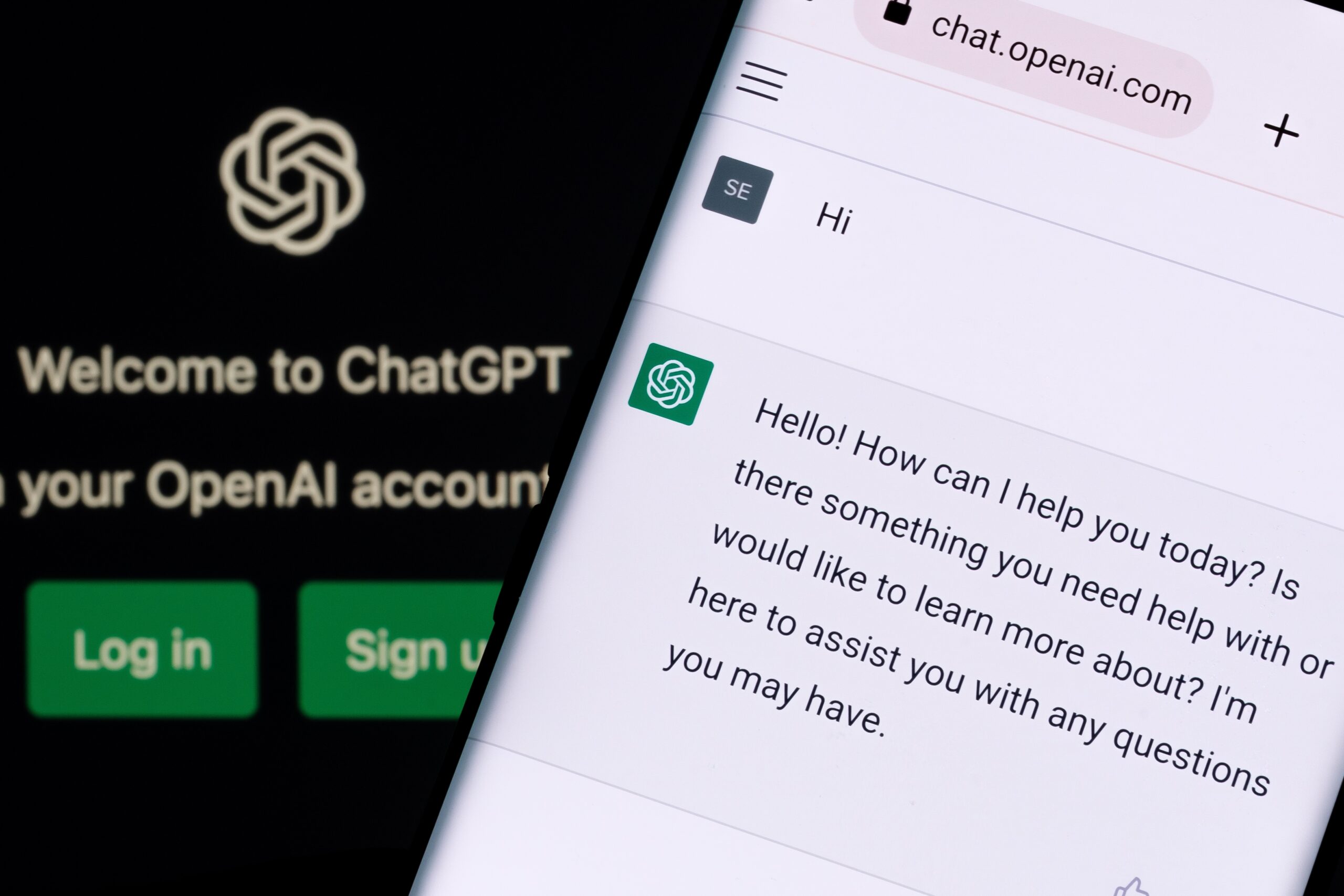
“What is Chat GPT?” is a frequently heard question this year. “What is AI? How does it work?” is occasionally the follow up. And for the sceptics, “Will it take my job? Is it dangerous?” One cheerful BBC News headline recently read “Artificial Intelligence could lead to extinction, experts warn”.
Artificial Intelligence (AI) and Machine Learning Technologies (MLTs) have rapidly gone from the stuff of science fiction to real world usage and deployment. But how will they affect the insurance industry, what are the legal implications, and is the whole issue really that much of a concern?
Taking the final question first, the evidence suggests that jobs are already being lost to this new technological revolution. In March 2023, Rackspace surveyed IT decision-makers within 52 insurance companies across the Americas, Europe, Asia and the Middle East. 62% of the companies said that they had cut staff owing to implementation of AI and MLTs in the last 12 months. In the same period, 90% of respondents said they had grown their AI and MLTs workforce.
It is worth drilling into the specifics of what AI and MLTs actually are. McKinsey & Company define AI as “a machine’s ability to perform the cognitive functions we usually associate with human minds”. MLTs, according to IBM, are best considered as a branch of AI, in which computers “use data and algorithms to imitate the ways that humans learn, gradually improving their accuracy”. So, taking ChatGPT (released 30 November 2022) as an example, Open AI (the developer) has trained ChatGPT on billions of documents that exist online. From news, to books, to social media, to TV scripts, to song lyrics. As explained by Boston Consultancy Group, the “trained model leverages around 175 billion parameters to predict the most likely sequence of words for a given question”. In many ways, it has to be seen to be believed. If you haven’t already, it is worth signing up to ChatGPT. It’s free and takes moments. The author has just asked it to write a Jay-Z song about the London Insurance Market and to write a story about Sun Tzu waking up in the world of Charles Dickens – both with instant, detailed results. The absurdity of the requests was done to demonstrate the power of the MLT: it is quite remarkable.
What is exciting, or scary, depending on your position, is that GPT-4 (the next version of ChatGPT) has 1 trillion parameters. It was released at the end of March and is behind a paywall. But the point is that the never-seen-before power behind the technology released only at the end of last year has become nearly 6 times more advanced in four months. Not unlike the Sorcerer’s Apprentice wielding his axe and doubling and redoubling broomsticks carrying pails of water, MLTs scythe through and consume data at an exponential rate.
So, what does it all mean for the insurance industry? MLTs can sift through data vastly faster than humans, and with far greater accuracy. The tech poses the most immediate threat to lower-level underwriters and claims handlers, as well as general administrative roles. But what about to the wider London Market?
As this firm’s David Pryce has explained*, the London Market does not have as many generalised wordings as do other insurance markets around the world. The policies written here are highly sophisticated and frequently geared towards bespoke risks. The specialism of the London Market means that, in terms of senior underwriters, while they may be informed by AI/MLTs, their judgement, gained through experience, will mean their role is fairly safe – machine learning tech is far superior at analysing past knowns than conceptualizing future risks.
Similarly, in high-value, sophisticated non-consumer insurance contracts that are the norm within Lloyd’s, questions arise about AI’s/MLTs’ potential to remove the broker role. Consider a cutting-edge ChatGPT equivalent that does the role of a broker, but is developed by an insurer for an insured. There is an inherent conflict between acting as an agent of an insured and seeking to maximise profit for the insurer. There would undoubtedly be a data bias in this metaphorical ChatGPT. In the same vein, a ChatGPT equivalent could be developed by London Market brokers, but this would miss the personalised touch that (human) brokers bring to the table (and policyholders enjoy). James Benham, Insurtech guru and podcast host, recently said that AI could stop brokers doing menial form-filing and spend more time doing what policyholders want – stress testing the insured’s policy and giving thought to what cover they need but had not considered. So while in the short term low-level work will likely be made more efficient by AI/MLTs, and lead to reductions in staff, a wholesale revolution or eradication of vast swathes of the London Market broking sector remains unlikely.
Finally, it is worth noting the speech on 14 June 2023 by Sir Geoffrey Vos, Master of the Rolls, given to the Law Society of Scotland’s Law and Technology Conference. After highlighting a recent example of an American lawyer who used ChatGPT for his legal submissions, in which ChatGPT not only grossly misunderstood/misrepresented the facts of some cases but actually made up another one for the purposes of the submissions, he cautioned the use of the MLT in legal proceedings. He further observed dryly that “clients are unlikely to pay for things they can get for free”. Perhaps specific MLTs will be successful developed in the near future to assist or stress test lawyers’ approaches (for example, Robin AI is a London-based startup that uses MLTs to assist lawyers with contract drafting), but ChatGPT is not there yet. A similar point could be made in its application to the insurance industry – simple, concise deployment of the technology will remove grunt work and effectively and cheaply simplify data, but human experience will not be replaced just yet. As with blockchain, in the short term we are likely to see more of an impact on consumer insurance contracts than high-value, bespoke, London Market insurance.
Dru Corfield is an Associate at Fenchurch Law
* See The Potential impact of ChatGPT on insurance policy wordings, Insurance Business Mag

Still on the starting block? Implications of blockchain for the Insurance Industry
Blockchain is a digital ledger technology that allows for secure and transparent record-keeping of transactions without the need for a centralised intermediary. It is a distributed database that is used to maintain a continuously growing list of records, called blocks, which are linked and secured using cryptography. Each block contains a cryptographic hash of the previous block, a timestamp, and transaction data, and is open to inspection by all participants to the ledger. Once a block is added to the chain, it cannot be altered or deleted, making the blockchain tamper-resistant and immutable.
Blockchain technology is best known for its use in cryptocurrencies, such as Bitcoin, where it is used to securely record and verify transactions. However, the nascent technology has potential to enhance the business model of insurers, brokers and policyholders.
Potential benefits of blockchain
- Transparency
One of the primary benefits of blockchain for the insurance industry is increased transparency. Policies can be complex and confusing for consumer policyholders and blockchain can be used to expediate and simplify claims handling. For example, the UK start-up InsurETH is developing a flight insurance policy that utilises blockchain and smart contracts. When a verified flight data source signals that a flight has been delayed or cancelled, the smart contract pays out automatically. This type of policy can improve trust between the insurer and customer, as the policies exist on a shared ledger that is accessible to both and there is little or no scope for dispute as to when an indemnity should be provided.
- Fraud Prevention
Another issue within insurance, especially consumer insurance, is fraudulent claims. The ABI detected over 95,000 dishonest insurance claims in 2020 alone with an estimated combined value of £1.1 billion. Blockchain could significantly assist with preventing fraud by providing a secure and transparent way to record and verify claims made. While the process would require extensive cooperation between parties, it is perfectly plausible (and indeed likely in the future) that blockchain could substantially reduce fraud by cross-referencing police reports in theft claims, verifying documents such as medical reports in healthcare claims, and authenticating individual identities across all claims.
- Efficiency
Underpinning the above two points is blockchain’s clear potential to reduce operational costs. The technology’s automated nature can cut out middle men and streamline the insurance process. Another UK start-up, Tradle, has developed a blockchain solution that expediates ‘Know your customer’ checks – a time-consuming process for companies and a source of annoyance for clients. Tradle’s technology verifies the information once, and then the customer can pass a secure ‘key’ to whoever else may have a regulatory requirement to verify identity and source of funds. This simple utilisation of blockchain saves time and money in what is usually a tedious process.
Possible issues
- Participants (standardisation)
Blockchain’s potential impact may be impeded, however, by various issues preventing a revolutionary deployment of the technology. As pointed out above, there needs be a wide level of consensus for blockchain to work properly. There is currently no standardisation in the Market in relation to how and when the technology should be implemented, and participants are understandably cautious about making investment into blockchain when there is no guarantee that it will initiate efficient solutions (due to the current ‘state of play’). Consensus among competitors will take time to evolve. It is telling that the two companies mentioned above as ones who use blockchain are start-ups – the traditional Market is somewhat glacial.
- Scalability
And even if the London Market effected a wholesale adoption of blockchain tomorrow, there could be issues of scalability. Blockchain relies on an ever-increasing storage of data, meaning that the longer the blockchain becomes the more demanding the need for bandwidth, storage and computer power. The data firm iDiscovery Solutions found that 90% of the world’s data was created in the last two years, and there will be 10 times the amount of data created this year compared to last. Some firms may be faced with the reality that they do not have the computational hardware and capacity to provide for the technology, especially when the blockchains will be fed by data that is ever-increasing in terms of quantity and complexity.
- London Market use?
Finally, questions arise about exactly which insurance contracts stand the most to gain from blockchain. Consumers would certainly benefit from smart contracts with their home/health/travel insurance policies. But within sophisticated non-consumer insurance, where the figures are large but the number of parties involved is limited, it is questionable whether current transaction models need blockchain. Where there is trust between a policyholder and broker, and a personal relationship between the broker and the underwriter (as is often the case at Lloyd’s), it is unclear what blockchain would really add to the process. It is worth mentioning that in late 2016 Aegon, Allianz, Munich Re and Swiss Re formed a joint venture known as B3i to explore the potential use of Distributed Ledger Technologies within the industry. B3i filed for insolvency in July 2022 after failing to raise new capital in recent funding rounds. It seems, at least in relation to the London Market, blockchain will have a slower, organic impact as opposed to revolutionising the industry.
Dru Corfield is an Associate at Fenchurch Law

Recent developments in the W&I sector: Q&A with Howden M&A's Head of Claims, Anna Robinson
Hot on the heels of the release by Howden of its annual M&A Insurance Claims Report we caught up with their Head of Claims, Anna Robinson, to find out about trends across the sector in 2020/2021 and her predictions for 2022.
A copy of the full report can be accessed here.
Q: Despite the turmoil of the pandemic, we understand that M&A transactions continue to increase as companies use mergers and acquisitions to grow. Is this increase in deal-making, and increase in the use of M&A insurance, starting to lead to an increase in claims activity?
A: Yes on both counts. Following a significant drop in deal activity at the start of the pandemic, there was a phenomenal and unprecedented increase in deal activity from Q3 2020 onwards and throughout 2021. The same period saw an exponential increase in the use of M&A insurance, and a corresponding increase in the number of notifications. Although the number of notifications in percentage terms has fallen since 2019, the absolute number of notifications has risen, which is a factor both of the increase in use of M&A insurance and the increase in Howden M&A’s market share.
Q: Has Covid had the impact on M&A claim notifications that was envisaged by the insurance industry? Do you expect any COVID-19-related claims trends to emerge in the future?
A: Interestingly the predicted spike in notifications did not materialise. With hindsight, in some ways that is not surprising as the deals done, and associated policies placed, following the emergence of COVID-19 would either have diligenced COVID-19 or excluded claims arising out of it.
Q3: Has there been an impact on when claim notifications are made against the policy i.e. are claims now notified earlier following inception or later?
A: Our research indicates that notifications are being made later. For notifications received from 2015 to 2019, 90% were made within 18 months of the policy’s inception. In 2020/2021 the proportion of later notifications, made after 18 months, rose significantly. There are two potential reasons for this – the first is that longer warranty periods are available, and the other is the increase in tax claims which, of course, have longer notification periods reflecting the time it can take for these to materialise.
Q4. Has there been a change in the claim values being discovered and notified under the policy?
A: It is the larger deals, and in particular the mega-deals (above €1 billion EV) that have a higher notification rate, and which rate increased again in 2021. These large and complex deals are both more difficult to diligence and often conducted at a fast pace meaning issues can be missed.
Q5. What’s the most common cause for claims and are there any emerging trends? Are there any sector trends for claims notifications?
A: The top three most commonly breached warranties that we see are: Material Contract warranties, for example where a known issue with a supply contract wasn’t disclosed; Financial Statement warranties, reflecting errors in the financial statements; and Compliance with Law warranties, where relevant legislation has not been complied with. This latter type of breach is something that arises commonly in relation to real estate deals where planning, environmental and safety laws are not complied with. While Tax warranties have historically been one of the most common breaches, it still takes up a large portion of notifications received at 17.8%. Taken together these four amount to just over three quarters of all notifications.
Q6. Has the percentage of notifications turning into paid claims changed?
A: The data shows that three-quarters of claims were resolved positively, which is a slight reduction from the previous period but is explained, in part, by the increase in precautionary notifications.
Q7. What would be your top tips for policyholders in getting their claims paid?
A: Good question! Notify early and in accordance with the policy provisions; particularise each element of the warranty breach and provide robust supporting evidence; keep the insurer updated and provide them with the documentation they need to investigate the claim, and, perhaps most importantly, make sure you can evidence the impact of the breach on the purchase price. Also, involve your broker as their relationship with the claims handler can be key to ensuring a smooth claims process.
Q8. What role does Howden M&A play in getting claims paid, can you give an example?
A: We provide assistance with the claims process as a W&I claim is often the first time an insured has dealt with an insurer in this context. We also assist clients with policy interpretation and quantum issues – quantum is typically the most complex part of a W&I claim. As brokers, we are able to deal directly with the insurers, and we can negotiate outcomes based on commercial as well as legal imperatives.
Q9. What role do coverage specialists, like Fenchurch Law have to play in the claims process?
A: Where a case turns on a point of law or policy interpretation, and the insurer/insured have reached stalemate and commercial negotiation has not assisted (which is rare!), it is vital for us, and our clients, to be able to have specialist advisers to call in that situation. Knowing that Fenchurch Law offer a free preliminary advice service is very reassuring!
Q10. Finally, what are your predictions for the coming year?
A: We predict a tidal wave of notifications in the coming year, reflecting the phenomenal increase in policies placed in 2020 and 2021. In similar vein, given the increasing number and size of the deals on which we advised in 2021 we anticipate that claim size and complexity will increase. In line with the trend for more policies (title and tax in particular) to include cover for ‘known issues’, we anticipate that notifications and claims arising under these policies will increase. Watch this space!


Short and sweet: insurers liable for bank’s cocoa product losses
ABN Amro Bank N.V. -v- Royal & Sun Alliance Insurance plc and others [2021] EWCA Civ 1789
The Court of Appeal has given insurers short shrift in their appeal against the finding of the Commercial Court that they were liable to the claimant bank, ABN Amro for losses it incurred following the collapse of two leading players in the cocoa market.
In a judgment notable for its brevity – a mere 26 pages compared to the 263-page first instance judgment - the Court of Appeal took just 5 paragraphs to set out their reasons for dismissing the appeal, finding that it simply did not ‘get off the ground’. It was, however, a sweet victory for the defendant broker, Edge, who, was successful in its appeal from the first instance decision, with an earlier finding of liability against it, arising from an estoppel by convention, being overturned.
The short first appeal
At first instance, the claimant bank, ABN Amro, succeeded in its claim for indemnity under an insurance policy placed in the marine market, relying on a clause the effect of which was to provide the equivalent of trade credit insurance. Such a clause was unusual in that marine policies typically provide an indemnity for physical loss and damage to the cargo, and not for economic loss. However, the court found the wording of the clause to be clear and to extend to the losses incurred by the bank on the sale of the cargo.
The insurers appealed this finding on the basis that the judge ought to have interpreted the clause as providing only for the measure of indemnity where there was physical loss or damage to the cargo.
The Court of Appeal disagreed, finding firstly that add-ons to standard physical loss and damage cover were common in the market and, where there were clear words, could result in wider cover; and secondly, that the wording of the clause was clear and operated to provide cover for economic loss. The wording of the clause was that of coverage, not of measure of indemnity or basis of valuation contingent on physical loss. Therefore, the bank’s losses incurred when selling the cargo, comprising various cocoa products, following the default by its cocoa market playing-customers on their credit policies, were covered by the policy.
The sweet second appeal
At first instance, the broker had been found liable to two of the defendant insurers, Ark and Advent, as a result of a finding of estoppel by convention. Ark and Advent had contended that they had been induced to write the policy following a representation that the policy being renewed was the same as the prior policy. It was, however, not in fact the same but included the clause in question providing trade credit cover. Neither Ark nor Advent read the policy and so were unaware of the inclusion of the clause. The representation that the policy was “as expiry” was found to give rise to an estoppel by convention meaning that the bank could not rely on the clause as against Ark and Advent, which in turn gave rise to a liability for the broker.
In appealing the finding of estoppel by convention, the broker sought to argue that the terms of a non-avoidance clause in the policy, which provided that the insurers would not seek to avoid the policy or reject a claim on the grounds of non-fraudulent misrepresentation, operated to preclude them from doing so. The Court of Appeal agreed, finding that the “as expiry” representations were non-fraudulent misrepresentations and as such, pursuant to the terms of the non-avoidance clause, the insurers could not rely on them to reject the claim. The judge at first instance was found to have erroneously focused on the ‘non-avoidance’ aspect of the clause, overlooking the fact that it also prohibited the rejection of a claim.
In sum
Given what the Court of Appeal described as the “sound and comprehensive” nature of the first instance analysis on the interpretation of the clause, it is perhaps surprising that the insurers sought to appeal, and certainly no surprise that they were not successful. Equally, the first instance finding of liability on the part of the broker was regarded by many as being out of keeping with the rest of the judgment – not least since Ark and Advent were effectively being relieved of their obligations by virtue of their failure to read the terms of the policy. As such, the finding is a welcome one on both counts, making it clear that, for good or ill, parties will be bound by the terms of the contracts they enter into.
Joanna Grant is a partner at Fenchurch Law

All round protection for brokers: how protecting the underwriter can protect your client and protect you!
Our March 2021 article ‘Insurers bound by the small print? I should cocoa!’ briefly noted that the judgment in ABN Amro considered the scope of a broker’s duty to procure cover that meets the insured’s requirements and protects it against the risk of litigation. But what does that mean in practice, and can it really extend, as was argued in this case, to a duty to explain unusual clauses to underwriters?
One of the many roles brokers perform is in relation to policy placement, which role involves advising their clients and dealing with underwriters. As part of that exercise a broker must: (i) ensure that it understands its client’s instructions and in the event of uncertainty query, clarify or confirm the instructions given; (ii) explain to its client the terms of the proposed insurance; and (iii) ensure that a policy is drawn up, that accurately reflects the terms of the agreement with the underwriters and which are sufficiently clear and unambiguous such that the insured’s rights under the policy are not open to doubt. It is well-established law that in the performance of these tasks, a broker must exercise reasonable care and skill.
If the coverage is unclear, the client will be exposed to an unnecessary risk of litigation, and the broker will be in breach of its duty.
The scope of this duty was considered in the recent ABN Amro Bank case. By way of brief factual background, the claimant bank provided instructions to its broker that it required cover against its clients defaulting under a finance agreement. The broker placed the risk with RSA under an all risks marine policy. A bespoke clause was added to the policy midway through the policy period which had been drafted by the bank’s external lawyers. The effect of the clause was to provide the equivalent of trade credit insurance.
When subsequently presented with a £33.5 million for financial losses suffered by the bank, the insurer refused cover on the basis that the clause had widened the scope of the policy beyond what a marine policy would ordinarily provide. That disputed claim resulted in litigation, as part of which the court had to consider the role of the broker and what it was required to do in order to fulfil its duty to arrange cover which clearly and indisputably met the client’s requirements, and did not expose the client to an unnecessary risk of litigation.
On the facts, it was held that:
- a reasonably competent broker would have advised its client from the outset that the credit risk market and not the marine insurance market was a more appropriate market in which to place the cover the bank had instructed it to obtain. Such advice would have enabled the bank to make an informed decision as to how to proceed;
- having gone to the incorrect market, it became important for the brokers to explain to the underwriters what the clause was intended to cover; and
- any reasonably competent broker would have specifically pointed out the clause to the underwriters and talked through the amended wording and its implications.
The broker argued that this effectively imposed an unprincipled “duty to nanny”. The court clarified that there was nothing in its reasoning or conclusions which was intended to suggest that brokers generally owe duties to their clients to explain particular clauses, including unusual clauses, to underwriters.
Rather, in order to fulfil its duty to obtain cover that met the bank’s requirements and did not expose it to an unnecessary risk of litigation, and thereby protect its client’s position, the broker needed to give information to underwriters and discuss the implications of that information. In doing so, it would avoid problems which would potentially arise in the future if underwriters did not share the bank’s understanding of the unusual clause.
As such, the requirement did not amount to a duty to protect underwriters, it was about the steps that needed to be taken to fulfil the duty of a broker to protect its own client.
Having failed to take those steps, on the facts of this case the broker was in breach of its duty and consequently liable to the underwriters and the bank for costs.
In this case, protecting the underwriter was a necessary part of protecting the client, and, in turn, protecting the broker from the consequences of failing to obtain cover that met its client’s requirements.
Authors

Webinar - D&O: life after the pandemic
Agenda
This talk will provide a recap on the types of claims that directors can face and how D&O policies can respond to them. It will also examine some of the issues arising with D&O claims, and how Covid-19 could present further challenges ahead for the D&O market.
James Breese is a Senior Associate at Fenchurch Law

Insurers bound by the small print? I should cocoa!
ABN Amro Bank N.V. -v- Royal & Sun Alliance Insurance plc and others [2021] EWHC 442 (Comm)
In the latest in a line of policyholder-friendly judgments, this recent ruling from the Commercial Court confirms that underwriters will be bound by the terms of policies they enter into whether they have read them or not.
The court found no grounds for departing from the important principle of English law that a person who signs a document knowing that it is intended to have legal effect is generally bound by its terms. Any erosion of that principle, which unpins the whole of commercial life, it was noted, would have serious repercussions far beyond the business community.
A foregone conclusion perhaps? Indeed the judge commented that prior to this case he would have regarded as unsurprising the proposition that underwriters should read the terms of the contract to which they put their names. What was it then that spurred the 14 defendant underwriters to seek to argue the contrary, apparently oblivious to the irony of their taking a point which routinely falls on deaf ears when more commonly made by policyholders unaware of implications of the small print for their claims?
In brief, the claimant bank, ABN Amro, was seeking an indemnity of £33.5 million under a policy placed in the marine market that unusually, and perhaps unprecedentedly, contained a clause the effect of which was to provide the equivalent of trade credit insurance, and not simply an indemnity for physical loss and damage to the cargo. As such, when the cargo, which in this instance comprised various cocoa products, was sold at a loss following the collapse of two of the leading players in the cocoa market and the default by them on their credit facility, the bank incurred losses that it contended were covered by the policy.
The underwriters submitted that the non-standard nature of this clause was such that clear words would have been required to widen the scope of cover beyond physical loss and damage, given the presumption that marine cargo insurance is limited to such loss. The court however found that, applying the well-established principles of legal construction, the wording of the clause was clear, and therefore its natural meaning should not be rejected simply because it was an imprudent term for the underwriters to have agreed, given the adverse commercial consequences for them.
The underwriters further submitted that they had not read the policy, and that the particular wording and its effect should have been brought to their attention as it was unfair to expect a marine cargo underwriter to understand the purpose of the clause. The bank contended that it was “frankly bizarre” for the underwriters to be essentially arguing that they, as leading participants in the London insurance market had to be told what terms were contained in the written policy wording presented to them and what those terms meant. The court agreed, finding that the underwriters could not properly allege that the clause was not disclosed to them when it was there in the policy to which they subscribed, and that further, as the bank contended, the insured was under no duty to offer the insurer advice. The insurer was presumed to know its own business and to be able to form its own judgment on the risk as it was presented.
Many other principles of insurance law were raised by this case and are covered in the wide-ranging 263-page judgment including (i) the applicable principles of legal construction; (ii) the incorporation and impact of a non-avoidance clause in the policy (it prevented the insurers from repudiating the contract for non-disclosure or misrepresentation in the absence of fraud); (iii) whether the underwriters had affirmed the policy by serving a defence that was consistent with a position that recognised its continuing validity (they had); (iv) whether mere negligence, as opposed to recklessness, was sufficient to breach a reasonable precautions clause in the policy (it was not); and (v) the scope of a broker’s duty to procure cover the meets the insured’s requirements and protects it against the risk of litigation (which duty had been breached and would have led to a liability on the part of the broker had the claims against the underwriters not succeeded).
However, the key takeaway for insurers, policyholders and commercial contracting parties alike is that a court will not step in to relieve a party of the adverse consequences of a bad bargain: the purpose of interpretation is to identify what the parties have agreed, not what the court thinks that they should have agreed. In other words, it always pays to read the small print.
Joanna Grant is a Partner at Fenchurch Law.