

Mind the Gap: Owners Corporation 1 Plan No. PS 640567Y v Shangri‑La Construction Pty Ltd [2026] VSC 117
Introduction
A recent decision of the Supreme Court of Victoria poses an important question for the construction sector in particular: where statutory and/or strict liability regimes which concern actions taken by directors or officers are not covered by professional indemnity (“PI”) insurance, is directors’ and officers’ (“D&O”) insurance able to plug any gap in cover?
Background
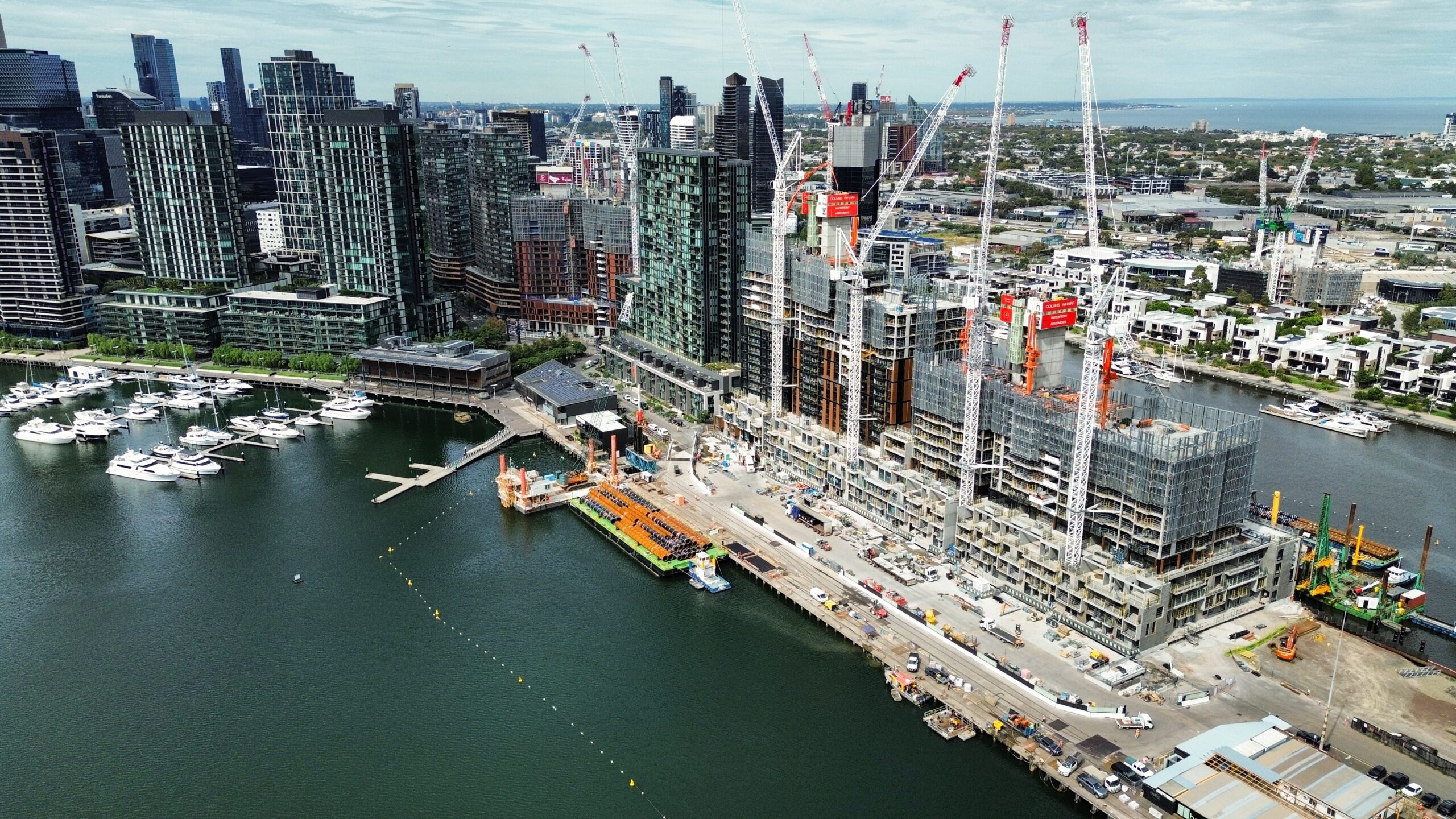
Shangri‑La Construction Pty Ltd (“SCP”) was appointed to design and construct a residential development in Victoria, Australia. SCP’s Managing Director, Mr Naqebullah, recommended that the external façade incorporated expanded polystyrene (“EPS”) cladding, which was later determined to be non‑compliant with applicable building regulations. Following remediation works funded by the State of Victoria (the “State”) (similar to the Building Safety Fund here in England & Wales), it pursued an action to recover such costs under Section 137F of the Building Act 1993 (Vic) (“Section 137F”), which was enacted in 2019. Section 137F is a strict liability provision which grants the State rights of subrogation against officers and/ or directors of contractors for the cost of cladding rectification work.
Pursuant to Section 137F, the State obtained summary judgment against Mr Naqebullah in the sum of approximately $3.17 million plus interest. Mr Naqebullah then sought indemnity under two consecutive “claims made and notified” professional indemnity policies taken out by SCP (the “Policies”).
Key questions
The Court was required to determine:
- Whether Mr Naqebullah was an “Insured” under the Policies;
- Whether a “Claim” had been made and notified within the relevant periods of insurance; and
- Whether the liability fell within the insuring clause, which responded to civil liability incurred in the conduct of the insured’s professional business.
Judgment
Insured status
The Court held that Mr Naqebullah was an insured person under the Policies. Although he was not named individually on the certificates of insurance, the policy documents, read as a whole (including the proposal forms), demonstrated that directors were intended to fall within the class of insureds.
Claims made and notified
The Policies were written on a strict claims made and notified basis. However, the State’s ability claim under Section 137F did not come into force until after the expiry of the Policies. As a result, and unsurprisingly, the Section 137F claim against Mr Naqebullah could not have been made during the relevant periods of insurance. Moreover, attempts to treat earlier proceedings involving SCP as the relevant claim, or to attach the Section 137F claim back to earlier notifications, were rejected as undermining the commercial purpose of claims made insurance.
Scope of the professional indemnity cover
Most interestingly from our perspective, the Court found that the liability imposed on Mr Naqebullah was not incurred in the conduct of professional business. “Professional Business” was defined by the Policies as design, including advice in relation to design in accordance with all relevant building, construction or engineering codes and standards.
It was Mr Naqebullah’s case that providing services as a registered building practitioner in drafting a specification under a design and construct contract constituted the provision of professional services of a skilful character as contemplated by the Policies.
However, no element of the State’s case against Mr Naqebullah involved provision of any design, specification or advice as contemplated by the “Professional Business” definition under the Policies, nor did Mr Naqebullah’s liability to the State depend in any way upon breach of a professional duty by him or by SCP. Instead, his liability arose solely (and strictly) under Section 137F as he was an officer of SCP at the time of the non‑compliant work.
Analysis and implications
This decision highlights an area of tension between statutory and/or strict liability regimes and professional indemnity insurance. Even where the factual background involves professional services, insurers will inevitably look closely at the legal basis on which liability is imposed. Where that basis arises in statute and/or by strict liability, PI insurance policies may not respond.
When that liability concerns actions taken by directors or officers, the question then becomes whether D&O insurance is able to plug any gap in cover.
Whilst there are no analogous strict liabilities directly arising from the design or construction of buildings here in England & Wales, sections 40 and 161 of the Building Safety Act 2022 (the “BSA”) did introduce offences for officers who commit, consent to or negligently fail to prevent breaches of the Building Act 1984 (including contravention of the Building Regulations) and breaches of Part 2 or Part 4 of the BSA (including obstructing building control or failing to manage Higher Risk Buildings).
While liability imposed on an individual by virtue of holding office might ordinarily be expected to fall within the scope of D&O insurance, such policies often contain broad professional services exclusions. This creates a real risk that policyholders may find themselves without cover under either policy.
Conclusion
For policyholders and brokers, the decision underlines the importance of reviewing PI and D&O cover together, rather than in isolation. Particular attention should be paid to the scope of the professional services definition and insuring clause alongside the breadth of professional services exclusions in D&O policies, and the extent to which programmes are designed to respond coherently to building safety liabilities.
Authors
Abigail Smith, Associate
Pawinder Manak, Trainee Solicitor


Ten years on: has the Insurance Act 2015 actually delivered for policyholders?
The Insurance Act 2015 (“the IA 2015”) was introduced to level the playing field for insurers and policyholders, and to move away from outcomes that were perceived as outmoded.
As the IA 2015 approaches its 10-year anniversary, this article will examine whether it has achieved those objectives – with particular focus on property damage claims – as well as the areas where uncertainty remains.
Duty of fair presentation: a shift in framework, as well as insurer behaviour?
One of the central reforms introduced by the IA 2015 was the introduction of proportionate remedies for breaches of the duty of fair presentation, which replaced the previous draconian “all or nothing” regime. In principle, this marked a significant and welcome shift. In practice, however, disputes concerning fair presentation and remedies remain common, particularly in the context of property damage claims.
A common example arises where, for example, following a fire, insurers allege that the policyholder failed to disclose historic alterations to the property, deficiencies with electrical compliance, or that one of its directors had previously been involved with insolvent companies. Had these matters been disclosed, insurers may assert that they would have only agreed to insure the policyholder on different terms or, as is more often the case, that they would not have agreed to insure the policyholder at all.
Insurers have increasingly sought to characterise alleged breaches of this nature as deliberate or reckless, thereby entitling them to avoid the policy outright (as well as keep the premium and refuse all claims), whilst sidestepping a detailed analysis of what they would have done differently. The result is that, rather than reflecting a fundamental change in behaviour, some claims handling practices have adapted tactically to fit within the structure of the IA 2015.
As a matter of law, the evidential burden remains firmly on insurers. It is for them, not policyholders, to prove how the alleged non‑disclosure or misrepresentation influenced their underwriting. In practice, insurers are frequently reluctant to disclose the evidence said to support their position, such as contemporaneous underwriting guidelines, contemporaneous exchanges at the time of placement, or a witness statement from the underwriter involved. In those circumstances, policyholders are left with an invidious choice: they can either accept the insurer’s position at face value, or commence litigation without fully understanding the strength of the case they must meet. Neither outcome sits comfortably with the intended purpose of the IA 2015, particularly in high‑value property damage claims where the consequences of avoidance can be severe.
Section 11 – a causation test, or not?
Section 11 of the IA 2015 (“s.11”) was intended to prevent insurers from declining claims on the basis of technical breaches of policy terms that had no connection with the loss. In straightforward cases, its application is uncontroversial. A breach of a fire alarm warranty should not entitle an insurer to avoid liability for a flood loss, just as a failure to maintain a burglar alarm should not defeat a claim for storm damage.
More complex property damage claims, however, expose the underlying difficulty in applying s.11 ie., where the breach can be shown not to have caused the loss per se, but it is harder to say that compliance could not have reduced the risk of that loss in different circumstances. So, for example, a failure to comply with a condition to store combustible waste in a particular place might not have caused a fire, but it nonetheless could have done. This gives rise to a fundamental question: does s.11 require a strict causation test, or is it sufficient that compliance with the term could theoretically have reduced the risk of the loss occurring?
The Law Commission appeared to favour a non‑causation approach ie., they said that the test is whether compliance could realistically have affected the loss that actually occurred, rather than requiring a strict causation analysis. However, the wording of s.11 focusses on whether the breach “could not have increased the risk of the loss which actually occurred in the circumstances in which it occurred”. That language strongly suggests that there is, in fact, an element of causation, because the emphasis is on the way in which a particular loss occurs. In practice, this shifts the inquiry toward a counterfactual assessment of whether compliance with the relevant term could have made a difference. So, in the context of an alleged breach of a requirement to carry out a 30‑minute fire watch following hot work, it would be open to a policyholder to assert that the breach could not have made any difference if fire did not break out until three or four hours later.
The High Court’s decision in Mok Petro Energy Ltd v Argo (No.2) [2024] EWHC 1935 (Comm) is the first decision on s.11. However, the provision was dealt with only briefly, and no more than a few paragraphs. The court’s observation – that the correct question is whether compliance with the term as a whole could have reduced the risk of the loss – was obiter, and not central to the outcome of the case. While the comments are nonetheless of interest (and are now frequently relied upon by insurers to reject a causation analysis), they fall short of providing definitive guidance. As a result, considerable uncertainty remains.
Damages for late payment: the theory and the reality
Section 13A of the IA 2015 (“s.13A”) introduced a statutory right for policyholders to recover damages for the late payment of insurance claims. For example, following a major fire loss, an insurer may decline cover and take many months to investigate and maintain that position, during which time the policyholder is unable to fund reinstatement and suffers continuing business interruption losses. If it is later established that the insurer had no reasonable basis for its declinature, s.13A would, in principle, entitle the policyholder to claim damages for losses flowing from that delay, such as additional loss of profits, or increased reinstatement costs.
In theory, s.13A represents a significant shift in the balance between insurers and policyholders, with the aim of discouraging unreasonable delays. In practice, however, its impact has been limited so far.
The threshold for a successful claim under s.13A is a demanding one. It is not enough for a policyholder to establish that an insurer was wrong to deny or delay payment of a claim; the policyholder must also prove that the insurer acted unreasonably. Where an insurer can demonstrate that it had “reasonable grounds” for disputing the claim, liability under s.13A will not arise, even if the coverage position is later shown to be wrong. This creates something of an asymmetry: a relatively low bar for insurers to resist liability, and a correspondingly high bar for policyholders seeking to recover losses caused by delay.
That imbalance is particularly acute in property damage claims. Following fires, or escapes of water, insurers often rely on extended investigations into causation, compliance with policy terms, or alleged non‑disclosure as giving rise to “reasonable grounds” to investigate a claim. While some degree of investigation is plainly required, the availability of “reasonable grounds” as a defence under s.13A offers insurers considerable latitude to justify prolonged delay.
There are also significant practical constraints. Claims for s.13A damages are evidence‑heavy, requiring detailed scrutiny of the insurer’s decision‑making process and the reasonableness of the time taken. Policyholders must also continue to comply with their duty to mitigate loss, which can be particularly challenging where reinstatement cannot happen without funding. As a result, the remedy is costly to pursue and, in many cases, commercially unattractive. It also raises the question as to whether well-resourced policyholders, who might be able to mitigate more easily, are able to establish claims for s.13A damages at all.
The case law reflects these difficulties. For example, in Quadra Commodities SA v XL Insurance Co SE [2022] EWHC 431 (Comm), the court suggested that a period of “not more than about a year” was reasonable for a complex claim. While that is helpful in principle (particularly as a benchmark against which delay in straightforward claims might be assessed), the policyholder ultimately lost its s.13A claim because the insurer was found to have had reasonable grounds for disputing coverage.
To date, there have been no successful reported claims under s.13A, and its effectiveness in future claims will depend, amongst other things, on the courts’ willingness to draw firmer lines around what constitutes an unacceptable delay. Until then, damages for late payment claims are likely to remain more of a strategic lever than a routinely deployed remedy.
A developing framework
While there has been meaningful case law in relation to the duty of fair presentation, other aspects of the IA 2015 remain comparatively underdeveloped. In particular, further authoritative case law on s.11 is needed to resolve the continuing uncertainty as to its proper application, especially in complex property damage claims where issues of causation and risk frequently overlap.
Similar uncertainty surrounds s.13A, and in particular the threshold for what constitutes “unreasonable” grounds for refusing or delaying payment of a claim. Absent any successful reported claims under s.13A, its true potential as a remedy for policyholders remains to be seen.
A decade on from its introduction, the IA 2015 has unquestionably reshaped the legal framework governing commercial insurance disputes. However, it has not eliminated all of the underlying tensions between insurers and policyholders. Further case law, particularly in relation to s.11 and s.13A, will be critical in determining how the IA 2015 operates in practice over the next decade.
Author
Alex Rosenfield, Partner
