

The Iran War: Property and Business Interruption Insurance Implications for Policyholders
The ongoing Middle East conflict has significant implications for many insurance issues facing policyholders. In the first of a two-part series, our partners Julian Teoh and Chris Wilkes highlight areas of concern for downstream policyholders outside of the conflict zone, and what these potentially affected policyholders should be looking out for.
Physical Damage Insurance
The effective closure of the Strait of Hormuz and Iranian attacks on energy infrastructure across the Middle East has resulted in a shortage of oil and gas and a spike in energy and related prices.
Energy price spikes are already translating into significant increases in the costs of reinstatement and rebuilding property which has been damaged.
- Petroleum-based materials such as waterproof membranes, paint and sealants have become more expensive as oil prices surge.
- Increased costs of insurance and shipping (due to increased fuel costs and the need to take longer routes to avoid the warzone) will also be baked into the end price of building materials.
- Large cranes consume large amounts of fuel. Coupled with labour shortages, crane hire rates have increased significantly since the start of the conflict.
- Energy costs feed directly into the cost of raw materials e.g. steel and aluminium, not to mention inflation causing a general increase in prices across the board, plus shortages of supply compounding price increases (and delay in supply).
The impact on supply chains is also likely to be severe, leading not only to increased direct costs, but also prolonged time scales for deliveries leading in turn to time inflation and related indirect costs.
It would be prudent for policyholders and their brokers to re-examine their physical damage sums insured under property, machinery and construction policies to reflect these issues. Policy average / under-insurance clauses can be applied even in partial loss situations, proportionately reducing any indemnity due under the policy.
Business Interruption and Increased Costs of Working Cover
Most operational policies contain cover for business interruption following damage and increased costs of working (ICW). In short, ICW are the additional costs incurred by the policyholder to mitigate BI losses (which may be highly relevant if there are delays in the supply of components or materials).
ICW cover is subject to various tests, including the “economic test”: the increase in costs must be less than the reduction in turnover due to the incident (i.e. the saving must exceed the cost of the additional expenses). In other words, uneconomic expenditure will not be covered.
Where the costs of inputs are spiking, it would normally be more difficult to pass this economic test. Policyholders will need to consider the interaction between cost and time-related savings when considering such mitigating measures.
Business Interruption (BI) Insurance
Non-Damage BI Extensions
Many BI policies contain non-damage BI extensions, i.e. they allow the policyholder to make a BI claim even where there has not been damage at the policyholder’s premises. Most relevant to the current conflict would be:
- Suppliers’ extensions: BI resulting from supply chain disruptions at suppliers.
- Denial of access: BI resulting from an inability to access the policyholder’s premises.
- Public authority order: BI resulting from an order from a civil or military authority.
The coverage triggers for these extensions is usually damage, whether at the premises of the supplier, within a certain radius of the policyholder’s premises or which has caused the authority to issue the order. But this is not inevitably the case. Especially in bespoke wordings, the coverage triggers may be far more permissive, and policyholders are encouraged to review their non-damage BI extensions.
Where the coverage triggers are damage-based, the policy’s war risks exclusion will also come into play. While these exclusions can be quite comprehensive, we would encourage policyholders to review the wordings carefully and seek advice on whether or not the exclusion applies.
Adequacy of BI Indemnity Periods
The BI indemnity period is the period for which the insurer agrees to indemnify the policyholder during which the interruption to business is ongoing.
If, for example, the policy BI indemnity period lasts for 12 months but the interruption persists for 18 months, the insurer is required to pay an indemnity for only 12 months. The policyholder would not enjoy any cover for its BI losses for the last 6 months.
If the conflict is prolonged and materials are in short supply and/or cannot be shipped to the premises in a timely manner due to the conflict or the knock-on effects, this may result in the interruption period extending beyond the policy’s BI indemnity period. In situations where critical parts of complex machinery are needed for the business to resume and are difficult to source in a timely manner, the shortfall between the indemnity period and the duration of the interruption will come into sharp focus.
Authors
Julian Teoh, Partner
Chris Wilkes, Partner

Insurance amid uncertainty: Implications of the Iran conflict for Policyholders
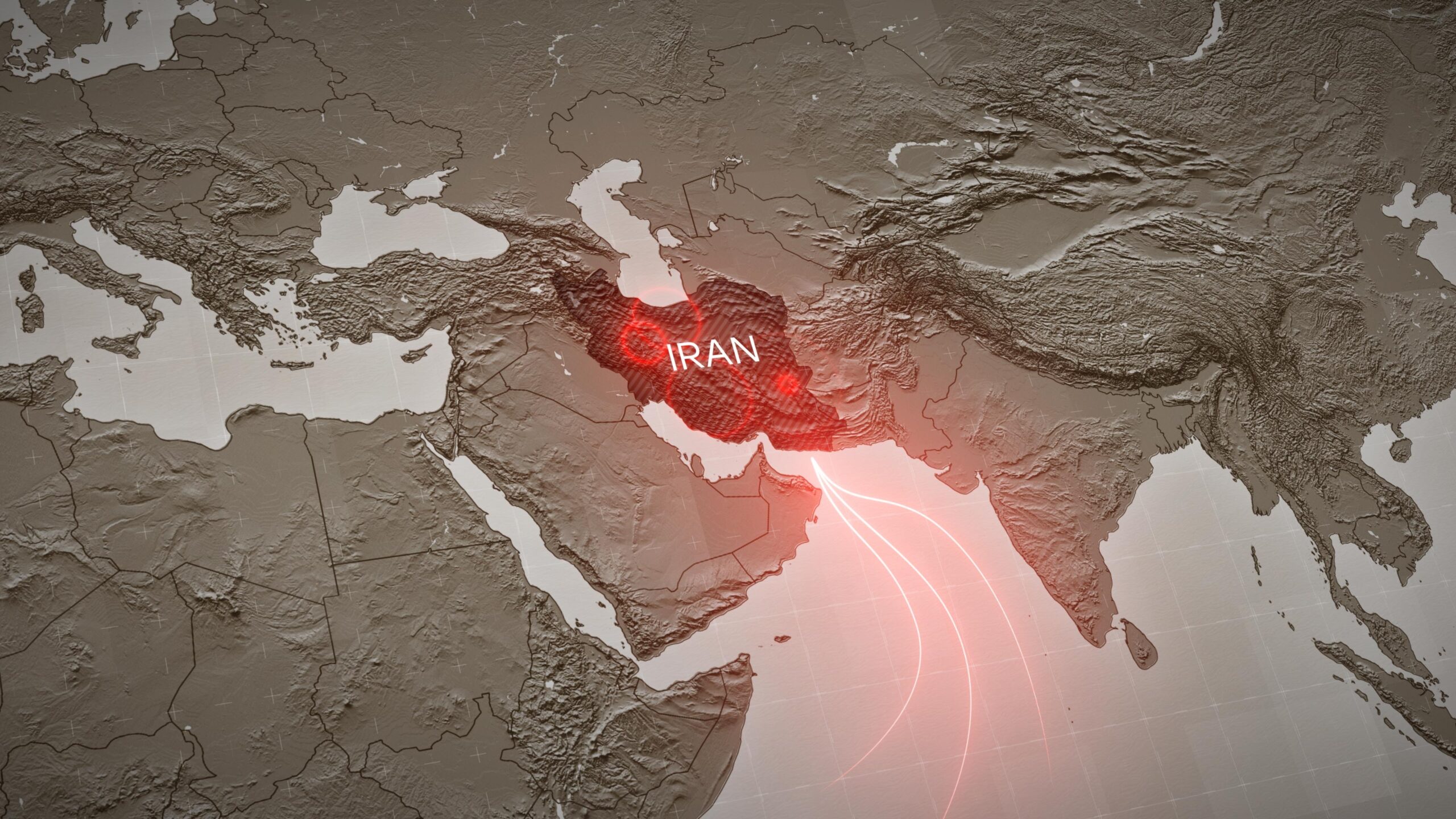
On 28 February 2026, the US and Israel launched a coordinated military operation against the Iranian regime. Iran has since responded with missile and drone attacks across the Gulf, creating risk across several major trading centres including Qatar, Bahrain, Oman, Saudi Arabia and the UAE.
In addition to the very real and devastating risk to life, the escalation of the conflict is causing significant disruption to global trade, transport and energy markets alongside extensive physical damage to insured property.
Below, we consider the implications of the conflict for policyholders across key classes of business, and the coverage disputes that may arise as claims emerge.
STANDARD WAR EXCLUSIONS IN PROPERTY INSURANCE POLICIES
Standard commercial property policies typically exclude damage or loss “directly or indirectly” caused by “war, invasion, acts of foreign enemies, hostilities (whether war be declared or not)…military or usurped power”, and whilst the parties to the conflict are yet to formally declare war, whether the conflict amounts to war under the rules of contractual interpretation is a separate question.
Since the 1930s, English courts have said that “war” does not have a technical meaning and should be interpreted in a “common sense way”. Since then, caselaw has provided deliberately wide guidance as to the definition of war, including the presence of opposing sides and the number of combatants involved.
The breadth of that definition, together with standard war exclusions which override the concept of proximate cause (by applying to damage / loss even indirectly caused by war), mean that many commercial insureds are without the benefit of war-related property cover under their standard property insurance policies. An unwelcome consequence of that is that significant business interruption losses following airport closures, port shutdowns, supply chain disruption and government restrictions are likely to fall outside of the scope of cover.
Much will depend on the precise wording of the exclusion and the factual matrix of the loss. We recommend that property and business interruption policies be scrutinised for war exclusions as soon as possible and, in addition, policyholders across the leisure and manufacturing industries assess their force majeure exposure under supply and services contracts.
THE “GRIP OF THE PERIL” DOCTRINE IN AVIATION AND MARINE INSURANCE
In light of the above, policyholders may look to recover under specific political violence / war risk insurance policies and extensions.
In June last year, we reported on the long awaited Russian aviation judgment handed down by the Commercial Court. The trial involved the detention of Western-leased aircraft following Russia’s invasion of the Ukraine in 2022. You can read our analysis of that decision here - Commercial Court grounds War Risks insurers in landmark Russian aircraft judgment - Fenchurch Law.
Of particular concern to policyholders was Mr Justice Butcher’s commentary on “the grip of the peril” doctrine. He held that:
“if an insured is, within the policy period, deprived of possession of the relevant property by the operation of a peril insured against and, in circumstances which the insured cannot reasonably prevent, that deprivation of possession develops after the end of the policy period into a permanent deprivation by way of a sequence of events following in the ordinary course from the peril insured against which has operated during the policy period, then the insured is entitled to an indemnity under the policy.”
He concluded that lessors whose cover had been terminated by insurers prior to the point at which the court considered they had been permanently deprived of the aircraft were entitled to cover, on the basis that the loss of the aircraft arose in a sequence of events that followed in the ordinary course of restraints and detentions that took place in the policy period. In other words, the aircraft were in the grip of the peril by the time the relevant policies were terminated.
That ruling may be of particular relevance to aviation and marine policyholders affected by the present conflict. As a result of the closure of airspace, airline fleets remain grounded across the Gulf. Those fleets are at considerable risk of being permanently lost as a result of missile strikes on airports in Dubai, Abu Dhabi, Bahrain and Kuwait. Whilst the market will no doubt issue review notices to terminate or vary cover in those instances (as they did in the Russian aviation case), its possible that insured aircraft may already be deemed in the grip of the peril depending on the precise factual and temporal sequence of events.
Similarly, in relation to marine insurance, standard hull and cargo policies also exclude war and political perils. As a result, shipowners and charterers trading in high‑risk areas typically rely on separate war risks policies which are cancellable on short notice, requiring vessels to leave designated danger zones within a defined period. We know that cancellation notices have already been issued in respect of the current conflict so, where those vessels are unable to leave for whatever reason (for example, as a result of port closures or government restrictions), the grip of the peril doctrine may become relevant.
Whilst that analysis may offer some comfort to certain policyholders with property in the conflict zone, political violence policies include their own standard exclusions, and losses caused by perils not purchased will be excluded in any event. If, for example, an insured has only purchased terrorism or civil unrest cover, they are likely to be uninsured for war-related losses.
We recommend that political violence and war risks cover be analysed immediately, alongside the delay provisions in any related sale and trade contracts.
AGGREGATION WORDING
Where losses are covered, significant disputes may arise in relation to aggregation. Iran’s missile and drone attacks have, to date, been segmented and geographically dispersed, raising questions as to whether losses arise from a single event, a series of related events, or multiple separate occurrences for the purposes of policy limits, deductibles and excess erosion.
Whilst the outcome of any dispute is likely to be driven by the aggregation wording in a specific policy, insurers are likely to argue for a narrow interpretation and policyholders should be alive to that issue.
POLITICAL RISK AND TRADE CREDIT INSURANCE
Finally, unlike political violence policies, political risk policies do not require physical damage to trigger cover. They insure against, for example, the confiscation or deprivation of assets and are concerned with the permanent or prolonged loss of rights in, or control over, those assets. Outcomes under these policies are likely to be driven by the definition of expropriation, whether the deprivation is permanent for the purpose of the policy terms, and any relevant waiting periods.
Also written within the political risk market is trade credit insurance. As the conflict progresses, disruption to energy sources and supply chains may impact a policyholder’s ability to perform its payment obligations under a contract. In those circumstances, whilst trade credit policies are likely to contain fewer war exclusions than property or marine policies, policyholders may still have challenges to overcome in relation to causation and aggregation.
CONCLUSION
Already, the market is taking steps to limit its exposure to the conflict by making amendments to certain wordings, and issuing cancellation notices in respect of hull and cargo. Policyholders would be well placed to undertake early analysis of policy terms, particularly in relation to relevant exclusions and the likely interpretation of aggregation wording. Early, careful engagement with policy wording and claims strategy will place policyholders in the strongest possible position as the insurance consequences of the conflict continue to unfold
Author
Daniel Robin, Managing Partner
Abigail Smith, Associate

Legal 500 Insurance Disputes Comparative Guide – 3rd Edition (UK Chapter)
The 3rd Edition of The Legal 500: Insurance Disputes Comparative Guide has now been released. The guide offers a practical overview of insurance disputes law and practice across multiple jurisdictions, highlighting key issues shaping the landscape today.
Fenchurch Law is pleased to contribute once again. Daniel Robin and Chloe Franklin authored the United Kingdom chapter, while Caglar Kacar authored the Türkiye chapter.
Each chapter provides insights into current trends in insurance disputes, covering topics such as insurance policies, dispute resolution, appeals, claims and causation, along with commentary on future developments in the field.
View the UK chapter here: https://www.legal500.com/guides/chapter/united-kingdom-insurance-disputes/
