


Aggregation In Cargo and Logistics Insurance Claims: What Insurers Must Prove When Aggregating by Accident, Occurrence or Event
In our experience, aggregation clauses are among the most heavily contested provisions in cargo and logistics insurance. They govern whether multiple losses are treated as a single claim for the purposes of applying limits, deductibles, and sub-limits, often making the difference between meaningful recovery and severe underinsurance.
While insurers frequently assert aggregation where there is a run of thefts, shortages or logistics failures, English law does not permit aggregation by default. The outcome turns on policy wording, causation, and the factual coherence of the losses said to aggregate.
THE CENTRAL IMPORTANCE OF WORDING
Aggregation is not governed by a single legal test, but depends on the policy wording selected. English law distinguishes between:
- Event/occurrence wording, which is construed relatively narrowly; and
- Originating cause/source wording, which allows a much broader backward search in the causal chain.
Courts have repeatedly emphasised that an “event” is something that “happens at a particular time, in a particular place, and in a particular way” (see AXA Reinsurance (UK) plc v Field [1996] 1 WLR 1026 (HL)). By contrast, where a clause aggregates by reference to an “originating cause”, aggregation may extend to a continuing state of affairs or a common operational failure, as considered by Spire Healthcare Ltd v RSA [2022] EWCA Civ 17.
Cargo and logistics policies frequently sit closer to the former category, even when they use hybrid language that permits aggregating a series of accidents or occurrences.
ACCIDENT, OCCURRENCE AND EVENT: DISTINCT CONCEPTS
In logistics policies, theft or loss of cargo is typically treated as an “accident” or “occurrence”, that is, a discrete fortuitous incident, often involving deliberate human conduct.
Where a policy allows aggregation of:
“a series of accidents or occurrences arising out of one event in any one location”
the structure of the clause matters.
In our view, the accident or occurrence remains the primary operative unit. The insurer must first establish that multiple losses can properly be described as arising out of one event (”event” being used here in the same functional sense as an ‘occurrence’, namely a specific happening in time and place) before aggregation can follow.
This hierarchy is critical, and it prevents insurers from eliding multiple independent thefts or interceptions into a single claim by appealing to a high‑level narrative (e.g. “organised crime”, “systemic theft”, “criminal gangs” etc.) divorced from the actual incidents.
SERIES OF LOSSES
Secondly, on the above wording, insurers must prove that the multiple losses are a “series”; in other words that there is some connection between the thefts and they are not simply a number of unconnected happenings.
WHAT INSURERS MUST PROVE: THE LEGAL BURDEN
Where aggregation is relied upon in relation to the number of limits applicable, the burden lies squarely on insurers to prove that the losses aggregate. To aggregate multiple cargo losses by reference to accident, occurrence or event wording, insurers must demonstrate the following:
- A Single Identifiable Event
Insurers must identify one event capable of unifying the losses. This cannot be merely a shared background risk or an industry‑wide problem. The courts have consistently rejected attempts to aggregate by reference to general conditions, vulnerabilities or ongoing criminality.
As the Supreme Court held in AIG Europe Ltd v Woodman [2017] UKSC 18, losses must be connected by more than similarity or coincidence; there must be a real inter‑connection such that they “fit together”, rather than being linked only through external background factors.
An assertion that multiple thefts were committed by an organised crime group is not sufficient unless the insurer can point to a specific operative event, for example, a single coordinated operation, decision or execution, rather than a series of similar opportunistic crimes.
- Causation: Losses Must “Arise Out of” That Event
Even if an event is identified, insurers must show that each loss arose out of it. This incorporates orthodox principles of legal causation.
Courts have repeatedly warned against treating the causal language in aggregation clauses as infinitely elastic.
In logistics contexts, where thefts occur:
- days or weeks apart,
- at different depots or distribution centres,
- involving different carriers or routes,
it becomes increasingly difficult for insurers to demonstrate that each loss arose out of the same event rather than out of separate, self‑contained criminal acts.
- Unity of Time, Place and Circumstances
Although not a rigid checklist, the “unities” analysis remains a powerful analytical tool where aggregation turns on event or occurrence wording.
Following Kuwait Airways Corp v Kuwait Insurance Co SAK [1996] 1 Lloyd’s Rep 664, courts typically examine:
- Unity of time – Were the losses contemporaneous or closely proximate?
- Unity of place – Did they occur at the same or related locations?
- Unity of cause – Were they caused by the same operative act or incident?
- Unity of intent – Where human action is involved, was there a single purpose or plan?
Where cargo losses are dispersed across time and geography, and where no single coordinated operation can be demonstrated, these unities are unlikely to be satisfied. Similarity of method, or repetition of thefts along a supply chain, is not enough.
- “One Location” Means What It Says
Many logistics policies restrict aggregation to losses arising from “one event in one location”. This is a significant limiting factor.
Insurers must demonstrate not only a single event, but a single location in a meaningful sense. Attempts to characterise an entire logistics network, route corridor, or regional supply chain as “one location” have little support in English law. Policyholders are entitled to insist on a physical and geographical reality, assessed from the standpoint of a reasonable observer, not by reference to the insurer’s preferred level of abstraction.
COMMON INSURER ARGUMENTS AND THEIR WEAKNESSES
Insurers frequently argue that multiple cargo thefts form part of:
- a single criminal enterprise,
- a continuing modus operandi, or
- a sustained campaign against the insured.
These arguments may carry more weight under originating cause wording, but under event‑based formulations, they face real difficulty. As the courts made clear in Woodman, similarity is not connection, and a shared background explanation does not establish a unifying event.
Even where organised crime can be shown, that does not compel total aggregation.
English law permits partial aggregation or clustering where appropriate, recognising that separate events may exist within a broader narrative.
PRACTICAL IMPLICATIONS FOR POLICYHOLDERS
For policyholders facing aggregation assertions in cargo and logistics claims:
- Ensure that insurers identify the specific event relied upon.
- Test whether causation genuinely runs from that event to each loss.
- Scrutinise unity of time, place and circumstances.
- Resist attempts to substitute high‑level descriptions for factual proof.
Aggregation is not achieved by labelling losses as “systemic”. It must be earned by evidence.
Author
Toby Nabarro, Partner (Singapore)

Mind the Gap: Owners Corporation 1 Plan No. PS 640567Y v Shangri‑La Construction Pty Ltd [2026] VSC 117
Introduction
A recent decision of the Supreme Court of Victoria poses an important question for the construction sector in particular: where statutory and/or strict liability regimes which concern actions taken by directors or officers are not covered by professional indemnity (“PI”) insurance, is directors’ and officers’ (“D&O”) insurance able to plug any gap in cover?
Background
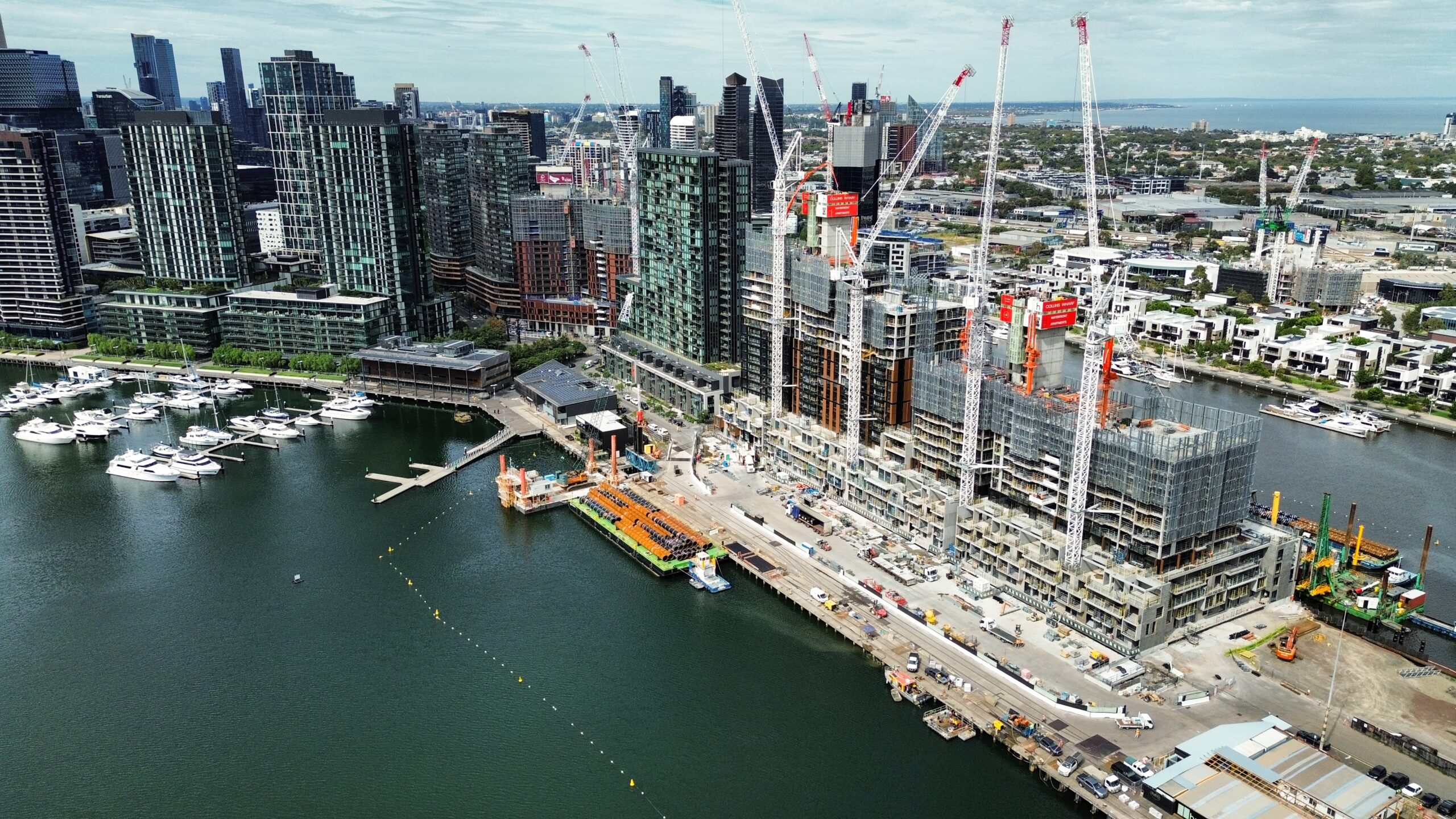
Shangri‑La Construction Pty Ltd (“SCP”) was appointed to design and construct a residential development in Victoria, Australia. SCP’s Managing Director, Mr Naqebullah, recommended that the external façade incorporated expanded polystyrene (“EPS”) cladding, which was later determined to be non‑compliant with applicable building regulations. Following remediation works funded by the State of Victoria (the “State”) (similar to the Building Safety Fund here in England & Wales), it pursued an action to recover such costs under Section 137F of the Building Act 1993 (Vic) (“Section 137F”), which was enacted in 2019. Section 137F is a strict liability provision which grants the State rights of subrogation against officers and/ or directors of contractors for the cost of cladding rectification work.
Pursuant to Section 137F, the State obtained summary judgment against Mr Naqebullah in the sum of approximately $3.17 million plus interest. Mr Naqebullah then sought indemnity under two consecutive “claims made and notified” professional indemnity policies taken out by SCP (the “Policies”).
Key questions
The Court was required to determine:
- Whether Mr Naqebullah was an “Insured” under the Policies;
- Whether a “Claim” had been made and notified within the relevant periods of insurance; and
- Whether the liability fell within the insuring clause, which responded to civil liability incurred in the conduct of the insured’s professional business.
Judgment
Insured status
The Court held that Mr Naqebullah was an insured person under the Policies. Although he was not named individually on the certificates of insurance, the policy documents, read as a whole (including the proposal forms), demonstrated that directors were intended to fall within the class of insureds.
Claims made and notified
The Policies were written on a strict claims made and notified basis. However, the State’s ability claim under Section 137F did not come into force until after the expiry of the Policies. As a result, and unsurprisingly, the Section 137F claim against Mr Naqebullah could not have been made during the relevant periods of insurance. Moreover, attempts to treat earlier proceedings involving SCP as the relevant claim, or to attach the Section 137F claim back to earlier notifications, were rejected as undermining the commercial purpose of claims made insurance.
Scope of the professional indemnity cover
Most interestingly from our perspective, the Court found that the liability imposed on Mr Naqebullah was not incurred in the conduct of professional business. “Professional Business” was defined by the Policies as design, including advice in relation to design in accordance with all relevant building, construction or engineering codes and standards.
It was Mr Naqebullah’s case that providing services as a registered building practitioner in drafting a specification under a design and construct contract constituted the provision of professional services of a skilful character as contemplated by the Policies.
However, no element of the State’s case against Mr Naqebullah involved provision of any design, specification or advice as contemplated by the “Professional Business” definition under the Policies, nor did Mr Naqebullah’s liability to the State depend in any way upon breach of a professional duty by him or by SCP. Instead, his liability arose solely (and strictly) under Section 137F as he was an officer of SCP at the time of the non‑compliant work.
Analysis and implications
This decision highlights an area of tension between statutory and/or strict liability regimes and professional indemnity insurance. Even where the factual background involves professional services, insurers will inevitably look closely at the legal basis on which liability is imposed. Where that basis arises in statute and/or by strict liability, PI insurance policies may not respond.
When that liability concerns actions taken by directors or officers, the question then becomes whether D&O insurance is able to plug any gap in cover.
Whilst there are no analogous strict liabilities directly arising from the design or construction of buildings here in England & Wales, sections 40 and 161 of the Building Safety Act 2022 (the “BSA”) did introduce offences for officers who commit, consent to or negligently fail to prevent breaches of the Building Act 1984 (including contravention of the Building Regulations) and breaches of Part 2 or Part 4 of the BSA (including obstructing building control or failing to manage Higher Risk Buildings).
While liability imposed on an individual by virtue of holding office might ordinarily be expected to fall within the scope of D&O insurance, such policies often contain broad professional services exclusions. This creates a real risk that policyholders may find themselves without cover under either policy.
Conclusion
For policyholders and brokers, the decision underlines the importance of reviewing PI and D&O cover together, rather than in isolation. Particular attention should be paid to the scope of the professional services definition and insuring clause alongside the breadth of professional services exclusions in D&O policies, and the extent to which programmes are designed to respond coherently to building safety liabilities.
Authors
Abigail Smith, Associate
Pawinder Manak, Trainee Solicitor

The Grenfell & Champlain Towers: Risk Management Considerations in the Wake of Catastrophic Loss — A UK/US Comparison
1. Introduction
As part of the multinational collaborative relationship between Saxe Doernberger & Vita, P.C. and Fenchurch Law, we continually find ourselves in conversations about the sometimes subtle but sometimes drastic differences between risk management and coverage considerations from one country to the next. These differences are often highlighted by the fallout from large catastrophic losses that are widely publicized and illuminate sometimes widespread risks and perils that many others may be facing in the coming years.
The response of governments and their subdivisions to the needs of victims and/or commercial parties, and insurance markets’ evaluation of and reactions to catastrophic losses vary widely from country to country and jurisdiction. In this article, we discuss these responses and reactions in the cases of the Grenfell Tower Fire in London, England, and the Champlain Tower collapse in Surfside, Florida, within the United States. These two widely publicized losses involved different risk management and insurance considerations based on where they occurred. They also saw substantially different government responses and raised varied questions about what the next steps are for their respective commercial and insurance markets.
This comparison highlights the variation in considerations that policyholders face when examining risks across national and international operations. What to expect and what to look out for depends heavily on where you do business, and we are excited to continue these conversations to support policyholders across the globe.
Whilst our joint analysis has identified some significant differences in the risk and insurance landscape for contractors and construction professionals operating in these key markets (largely, and perhaps unsurprisingly, driven by key regulatory and legislative differences), there are common themes including the effect of public response and awareness, insurance market reactions and risk management considerations.
2. The Grenfell Tower Fire
A. Background
On 14 June 2017, a catastrophic fire ripped through a high-rise residential building in Central London known as Grenfell Tower, resulting in the tragic deaths of 72 people. Prior to the fire, Grenfell Tower had undergone significant refurbishment, which included new windows and a rainscreen cladding system being fixed to the outside of the reinforced concrete structure. Many of the materials and components used were either combustible or not of limited combustibility, which is thought to have significantly contributed to the intensity of the fire and the speed with which it spread around the 24-storey structure.
The fire has had a seismic impact on owners, leaseholders, and tenants of buildings with unsafe cladding, many of which were, and continue to be, faced with huge challenges in relation to the cost of remediation and the interim fire safety measures.
The tragedy has also had a significant effect on those operating in the construction industry, including the availability and applicability of their insurance when faced with claims from parties seeking to fund the cost of removing and replacing unsafe cladding. That work of itself has, in some instances, revealed other defects, in turn leading to increased claims against those involved in the design and construction of buildings.
B. Immediate Implications
The focus after the tragedy was rightly to try and identify the cause of such an intense fire, with the refurbishment being the obvious starting point. The UK Government commissioned the Building Research Establishment to undertake a series of tests on aluminium composite material (“ACM”) panels in combination with a number of other common external wall components in order to test compliance with the Building Regulations. Only one of the tests passed, which included mineral wool insulation. Although the initial focus was on ACM, subsequent tests and investigations revealed similar non-compliances caused by the use of non-ACM materials.
The Government also immediately announced a Public Inquiry into the tragedy, which began hearing evidence in September 2017, leading to the Phase One report (dealing with the events on the night of the tragedy) being issued in October 2019, followed by Phase Two (concerned with the refurbishment of the tower) in September 2024. To date, the criminal and civil proceedings in relation to the Grenfell Tower itself remain ongoing, although that is most likely due to those proceedings needing to await the conclusions from the Inquiry.
External wall systems similar to those used on Grenfell Tower (both ACM and non-ACM) had been commonly used in both residential and commercial developments for many years (if not decades). Given the sudden attention which these systems were now receiving as a result of the public outcry following the tragedy, many involved in the design and construction of buildings using similar systems were facing immediate requests for information on the materials used and the threat of claims if the buildings were unsafe and/ or non-compliant with the Building Regulations.
C. Insurance Implications
Non-compliant cladding systems present an issue in relation to first-party insurance coverage, which is almost exclusively by damage. Absent a definition in the policy, damage will likely be determined by reference to common law authority, which is concerned with a physical change that has impaired the use or value of the insured property. Non-compliant cladding has not undergone a physical change – its condition has remained stable, and its unwanted quality comes from its non-compliance, which renders it defective (not damaged). Policyholders therefore had to look to other sources for insurance cover, including latent defect policies which provide first-party cover absent damage if there is a present or imminent danger.
From a liability perspective, contractors and construction professionals had little choice but to consider the nature and extent of their exposure to claims and their coverage for professional negligence claims, particularly in view of more restrictive cover being introduced on policy renewal, many of which included full or partial exclusions for fire safety and/ or cladding claims. Some policyholders were therefore placed in an unenviable position – either notify circumstances which could give rise to claims to an expiring policy knowing those notifications were likely to be challenged, or face the risk of any claims being excluded from subsequent policies as a result of either fire safety and/ pr cladding exclusions or known or prior circumstance exclusions.
In practice, many policyholders made ‘block notifications’ to their professional indemnity insurance policies in an attempt to salvage some insurance cover in the face of restrictive cover on renewal. Whilst relatively unusual prior to Grenfell, block notifications enable a policyholder to, as the name suggests, notify a large number of related circumstances at one time, although the validity of each will be assessed individually. Although there is a practical benefit to a policyholder in notifying circumstances in this way, it does attract suggestions from insurers that the subsequent claims aggregate as they are related (given that they lent themselves to a block notification).
D. Ensuing Litigation and Government Reactions
In the years that followed the Grenfell tragedy, a wave of claims were brought against contractors and construction professionals in relation to allegedly defective and/ or unsafe buildings. Solomonic reported in September 2024 that over 100 such claims were issued in the Technology & Construction Court since the Grenfell fire[1], although many more are likely to be in the pre-action phase. Policyholders were typically faced with challenges to cover under policies they might expect to indemnify them in respect of liability arising from such claims for numerous reasons, including that:
a) the validity of the notification (block or otherwise) – either that by reference to the applicable threshold and/ or requirements, notifications were made too soon or too late;
b) the claims arose from known circumstances if they were notified to the policy, which renewed in the months following the Grenfell tragedy;
c) some or all of the alleged issues were caused by poor workmanship, as opposed to design or specified, such that the claim was excluded; and/ or
d) even if the policy did respond, then any claims would aggregate as they arose from the same originating cause or the same act or series of acts.
To date, there have not been any significant reported judgments concerning disputed insurance cover for cladding or fire safety claims, although that is potentially a result of policyholders compromising claims when settling the underlying liability claim, or coverage claims being resolved by arbitration (which is a confidential dispute resolution process).
More generally, the necessary work to remove unsafe cladding / external wall systems has led to the discovery of wider issues, including internal fire safety defects (such as poor compartmentation or fire stopping) and structural defects (which were hidden behind external wall systems). These have been the subject of numerous and significant claims of their own right, including BDW Trading Limited’s claim against structural engineer, URS (now part of AECOM), which went all the way to the Supreme Court in 2025.
The drive to remediate unsafe buildings (with reports suggesting that 4,630 residential buildings over 11m still have unsafe cladding[2]) resulted in both the Government having to introduce public funding for those works, including the Building Safety Fund and the Developer Remediation Contract which required developers to remediate unsafe residential buildings or face being excluded from development work or denied building control approval on new developments.
However, notwithstanding the positive action taken by the Government, there were calls to improve the rights and remedies of affected owners, leaseholders, and tenants, as well as avoid repeated instances of systemic failures going forward – both of which were purposes of the Building Safety Act 2022.
E. The Building Safety Act 2022
The first formal step towards legislative change as a result of the Grenfell tragedy was the ‘Building a Safer Future’ publication in June 2019, although it took until 28 June 2022 for the Building Safety Act 2022 (“BSA”) to be implemented. The BSA introduced a raft of retrospective and prospective changes to building safety legislation, with the most significant from an insurance coverage perspective being:
a) Extension of the retrospective limitation period for claims under the Defective Premises Act 1972 (“DPA”) from six years to thirty years (fifteen years prospectively); and
b) The implementation of new remedies in the form of Remediation Contribution Orders (“RCOs”) and Building Liability Orders (“BLOs”) which, in prescribed circumstances, can ‘pierce the corporate veil’ and pass liability for the cost of remediating unsafe buildings from the original contracting party to its ‘associates’
Whilst it typically takes longer for the insurance coverage implications of such significant legislative changes to appear compared with the often more immediate impact on underlying liability claims, the following are already presenting issues in practice:
a) Given the surge in claims being made under the DPA, insurers are adopting a more restrictive approach to coverage under PI policies, including arguing that the duty under the DPA is strict and therefore does not trigger the reasonable skill and care requirement of most PI insuring clauses;
b) That liabilities arising from RCOs or BLOs are similarly uninsured as the act, error or omission giving rise to the liability is that of the associated entity, not the RCO or BLO defendant; and
c) That in any event, any claims which are now available pursuant to the BSA, arise from known or prior circumstances (and are therefore excluded) and/ or do not attach to any existing notifications in the years following the Grenfell tragedy.
These disputes are likely to take many years to resolve, although it seems inevitable that policyholders facing these new claims/ remedies will have little choice but to pursue their insurers given the sums at stake.
3. The Champlain Towers South Collapse
A. Background
In the middle of the night on June 24, 2021, a twelve-story beachfront condominium tower called Champlain Towers South in the Miami suburb of Surfside partially collapsed, killing nearly one hundred people and injuring almost a dozen more. An effort to recover survivors of the collapse began in earnest and continued through late July. Many people had to be rescued from the un-collapsed portion of the building, but only four people were rescued from the building’s rubble, and only three of them ultimately survived.
Champlain Towers South was originally built in the early 1980s, along with two other towers completed in the late 80s and early 90s. In the days leading up to the collapse, emerging cracks and other indications of structural stress were observed, including water leaking into the underground parking garage from an area that had been the site of many cracks and repairs over the years. One resident reported that minutes before the condominium tower fell, the pool deck and street-level parking collapsed into the underground garage.
The U.S. National Institute of Standards and Technology (“NIST”) assigned a team of scientists and engineers to investigate the cause or causes of the collapse, and their work continues to this day. Preliminary findings in 2021 indicated the collapse started in the pool deck rather than in the tower itself. NIST’s subsequent years of investigation determined that the collapse likely started in a pool deck slab-column connection and then progressed through the condominium tower. Their reports also indicate that there were indications of the building’s distress that were visible in the weeks before the partial collapse.
B. Litigation, Investigation and Government Action
Almost immediately, a lawsuit on behalf of the residents of the building and their survivors was brought against the Champlain Towers South Condominium Association’s board in the local trial court. Shortly thereafter, the court appointed class counsel for separate groups of those injured or killed in the collapse, survivors, and former residents. Subsequently, numerous other defendants that were involved in development, maintenance, management, security, or repairs for the tower, as well as their insurers, were added to the suit.
Just before the one-year anniversary of the collapse, the named defendants, as well as some unnamed defendants, and their insurers reached a $1.02 billion settlement with the plaintiffs in the class action. Despite the ultimate cause of the collapse being unknown, nearly half of the settlement came from a single company and its insurers, in relation to an on-duty security guard not triggering a building-wide alarm before exiting the building. Subsequent investigations into the causes of the collapse also raised concerns about significant deferred maintenance of the structure’s concrete components, waterproofing, saltwater corrosion of exposed rebar, inadequate original construction, impacts of construction at an adjacent site, and years of subsidence in the area.
Government reactions to the collapse have been focused locally and regionally, rather than nationally. There are hundreds of high-rise condominiums with thousands of units like those in the Champlain Towers all across Florida. In the wake of the collapse, Florida passed condominium reform legislation creating a state-wide inspection program for condo buildings taller than three stories. Buildings will go through a milestone inspection certification process upon reaching thirty years of age, or twenty-five if they are located within three miles of the coast. They will be inspected again every ten years afterward. Inspection records will be made public, and condominium associations will not be able to waive structural maintenance fund reserve requirements. That statute was later amended to give the local authorities discretion on whether to inspect at 25 or 30 years.
C. Insurance Implications
On the first party side, there is no real dispute that there was physical loss or damage to the Champlain Towers, but common issues in the property insurance markets are worth noting. Collapse has been a peril of focus for many years, and policies vary widely on whether they cover collapse, whether collapse is limited to certain causes, or whether it is subject to lower sublimits. Wear and tear, inherent vice, subsidence, or exclusions related to defective construction can also be problematic in situations like the Champlain Tower collapse. Undoubtedly, we will see more restrictive variations in these terms emerging as insurance markets react to the risks highlighted by this tragedy. Lenders, property owners, and developers must keep a keen eye on the markets in light of their portfolios’ risk profile to ensure buildings are properly underwritten.
In terms of liability, the collapse implicated a wide swath of operations, from property management and security to maintenance, professional consulting and improvements, and all of the insurance underwriting those operations. Through their association by management control, maintenance or upkeep operations, security services, or otherwise, numerous companies and their insurers were brought into the suits seeking damages caused by the tower’s collapse. Those managing or providing services at the site, or who performed maintenance or construction at the site, would rely on commercial general liability as the primary source of contribution. Any professional service providers, including architects or engineers that might have been involved, were also relying on professional errors and omissions liability insurance. The condominium’s board may also have been relying on errors and omissions coverage for decisions associated with allegedly deferred maintenance.
Although a swift settlement was reached in this case, there are some common and emerging issues in liability insurance that are worth highlighting. One of the most concerning is the market’s creeping limitations on completed operations coverage. Exclusions have started to pop up in liability insurance for work performed before the current policy period, despite no injury or damage ever occurring before the current policy period. So, for example, assume a waterproofing contractor worked at Champlain Towers two years before the collapse. If their insurance in place at the time of the collapse had an exclusion in it for work performed during a previous policy period, the insurance in place at the time of the collapse would not respond. Nor would the policy in place at the time of the work respond, because liability insurance typically requires bodily injury or property damage that did not occur until the collapse itself.
Over the years, we have seen incidents like this driving subtle changes in the market that do not get scrutinized until a loss has occurred and it is already too late. Given the jurisdictional and situational variability in the U.S., commercial parties must take a proactive approach to insurance placement and renewal to ensure they are keeping up with market shifts.
D. Broader Legislative and Commercial Considerations
Unsurprisingly, insurance premiums for condominiums in the area have increased by orders of magnitude since the collapse. Unlike the UK’s response of ensuring remedies for aggrieved survivors, Florida’s responses to increased insurance costs have been “tort reform,” with major legislation coming in the form of HB 837 in 2023. Amongst other things, the bill implemented a modified negligence system, reduced the statute of limitations for negligence claims, eliminated one-way attorney fees for bad faith in many cases, and placed other limitations on attorney fees as well as damages evidence. Insurers have benefited heavily from these reforms, and Florida touts the bill as a tremendous success in their favor.
In the United States, each state has its own scheme of statutes of limitations and statutes of repose. The former being the amount of time after which a claim can no longer be brought by an injured party. The latter being the amount of time after construction operations are completed beyond which construction defect claims cannot long be brought by anyone. In Florida, the statute of repose is seven years from, amongst other things, the date of a certificate of occupancy or completion, or when construction is abandoned. As with the reduced remedies under Florida’s “tort reform” bill, the statute of repose was actually shortened from ten years to seven.
Also, unlike the UK, there is no national corollary to the Building Safety Act, and public funding for proactive remediation of potential risks like those associated with the Champlain Tower collapse is rare. Sometimes, federal disaster relief is granted for specific catastrophes, but not since the implementation of superfund site support has the US seen proactive national support for risk remediation. Further, the general rules regarding corporate immunity and veil piercing, along with statutes of repose, can shield entities historically affiliated with a building like Champlain Towers if they are removed in time or association. The localized administrative requirements issued by Florida in response with respect to building inspections were the only meaningful government response to the tragedy. In the U.S., states and local governments vary significantly in how they balance the interests of builders, property owners or managers, and tenants or buyers.
Without comprehensive remedies to address the serious considerations raised by an event like the collapse, the focus has been on commercial reactions. Property owners and developers are taking stock of their profiles and reassessing risks based on the lessons learned. The operations and decision-making of property managers and boards with respect to needed and deferred maintenance of older buildings are getting a second look in light of known issues at Champlain before the collapse. Certainly, with respect to older concrete buildings near the ocean, contractors engaged in maintenance and upkeep operations are also highlighting the implications of the Champlain collapse in their transactions with owners. The collapse likely impacts the value and risk associated with older buildings, pushing owner and equity groups toward new construction generally, whereas the Grenfell issue is easier to identify as a prospective buyer.
However, commercial entities should also be looking out for changes in the insurance markets. As with other large-scale historic losses, such as Exterior Insulation and Finish Systems, we have seen changing terms creeping into policy terms. New forms and endorsements related to concrete, subsidence, wear and tear, or other similar items should get a second look in light of a company’s portfolio and risk profile. Without a close eye on the market, new exclusions have a habit of popping up when it is already too late.
4. Observations and Conclusions
While remedies available and governmental responses to catastrophes like Grenfell and Champlain vary considerably from country of jurisdiction to another, some risk management considerations are more normalized.
One significant difference we see in Grenfell as compared with Champlain is the relative speed at which survivors of the Champlain collapse settled their claims as compared those of the Grenfell catastrophe. Some observers noted that the Champlain suits settled relatively quickly due to the potential publicity associated with delaying compensation for the victims. This is in part a function of the ability of survivors to bring and establish a class action so quickly and verdict escalation in the U.S., with many potential parties at risk, each with limited insurance and assets to contribute and not wanting to get left out of a settlement. Compensation for Grenfell survivors will take longer, arguably because the criminal and civil proceedings needed to wait for the Public Inquiry to conclude. On the other hand, the UK saw national governmental implementation of new remedies in response to Grenfell, where no such national response occurred in the U.S. after Champlain. Instead, Florida’s pressure from the insurance markets actually eroded policyholder remedies.
In part, the sheer size of the U.S., but also its more recent historical political tendencies, make it unsurprising that national remedies in response to a tragedy like Champlain would be unlikely. As such, changes in remedies tend to be more localized, though still influenced by large commercial interests lobbying power. Additionally, proactive risk management is much more of a commercial exercise rather than adjusting to legal changes. Policyholders in the U.S. benefit substantially from robust reviews and vigorous engagement in the insurance procurement and contractual risk management processes. This should include keeping an eye on insurance markets for reactions to publicized risks and addressing these risks up front through business practices.
By comparison, the national remedies in response to Grenfell in the UK may have taken time to implement, but their impact has been widespread both in terms of the rights and remedies of those effected by unsafe cladding in the built environment, as well as the building safety regime and regulations for new buildings. Those changes have dramatically increased the liability landscape for contractors and construction professionals, inevitably resulting in increased insurance coverage disputes in relation to historic projects. However, at the same time, those measures seek to reduce the building safety risks in future projects, which should, in turn, lead to improved design, procurement, and risk management measures and, ultimately, reduce the liability exposures of those operating in the construction industry.
Despite the jurisdictional differences, there are some risk management and insurance considerations that will be more universal. Policyholders must still pay close attention to managing retrospective dates, aggregation clauses, and notification provisions in claims and risk management practices. Policyholders should also take stock of statutes of limitations or repose in jurisdictions where they have operations, and trends in completed work or continuing damage terms in their insurance markets to stay current on best practices.
Authors
Rob Goodship, Partner Fenchurch Law
Eric Clarkson, Senior Associate, SDV Law
[1] 100+ cladding and fire safety claims seven years on since Grenfell Tower fire — Solomonic
[2] Housing block residents still caught in cladding crisis after Grenfell tower fire | The Independent
Ten years on: has the Insurance Act 2015 actually delivered for policyholders?
The Insurance Act 2015 (“the IA 2015”) was introduced to level the playing field for insurers and policyholders, and to move away from outcomes that were perceived as outmoded.
As the IA 2015 approaches its 10-year anniversary, this article will examine whether it has achieved those objectives – with particular focus on property damage claims – as well as the areas where uncertainty remains.
Duty of fair presentation: a shift in framework, as well as insurer behaviour?
One of the central reforms introduced by the IA 2015 was the introduction of proportionate remedies for breaches of the duty of fair presentation, which replaced the previous draconian “all or nothing” regime. In principle, this marked a significant and welcome shift. In practice, however, disputes concerning fair presentation and remedies remain common, particularly in the context of property damage claims.
A common example arises where, for example, following a fire, insurers allege that the policyholder failed to disclose historic alterations to the property, deficiencies with electrical compliance, or that one of its directors had previously been involved with insolvent companies. Had these matters been disclosed, insurers may assert that they would have only agreed to insure the policyholder on different terms or, as is more often the case, that they would not have agreed to insure the policyholder at all.
Insurers have increasingly sought to characterise alleged breaches of this nature as deliberate or reckless, thereby entitling them to avoid the policy outright (as well as keep the premium and refuse all claims), whilst sidestepping a detailed analysis of what they would have done differently. The result is that, rather than reflecting a fundamental change in behaviour, some claims handling practices have adapted tactically to fit within the structure of the IA 2015.
As a matter of law, the evidential burden remains firmly on insurers. It is for them, not policyholders, to prove how the alleged non‑disclosure or misrepresentation influenced their underwriting. In practice, insurers are frequently reluctant to disclose the evidence said to support their position, such as contemporaneous underwriting guidelines, contemporaneous exchanges at the time of placement, or a witness statement from the underwriter involved. In those circumstances, policyholders are left with an invidious choice: they can either accept the insurer’s position at face value, or commence litigation without fully understanding the strength of the case they must meet. Neither outcome sits comfortably with the intended purpose of the IA 2015, particularly in high‑value property damage claims where the consequences of avoidance can be severe.
Section 11 – a causation test, or not?
Section 11 of the IA 2015 (“s.11”) was intended to prevent insurers from declining claims on the basis of technical breaches of policy terms that had no connection with the loss. In straightforward cases, its application is uncontroversial. A breach of a fire alarm warranty should not entitle an insurer to avoid liability for a flood loss, just as a failure to maintain a burglar alarm should not defeat a claim for storm damage.
More complex property damage claims, however, expose the underlying difficulty in applying s.11 ie., where the breach can be shown not to have caused the loss per se, but it is harder to say that compliance could not have reduced the risk of that loss in different circumstances. So, for example, a failure to comply with a condition to store combustible waste in a particular place might not have caused a fire, but it nonetheless could have done. This gives rise to a fundamental question: does s.11 require a strict causation test, or is it sufficient that compliance with the term could theoretically have reduced the risk of the loss occurring?
The Law Commission appeared to favour a non‑causation approach ie., they said that the test is whether compliance could realistically have affected the loss that actually occurred, rather than requiring a strict causation analysis. However, the wording of s.11 focusses on whether the breach “could not have increased the risk of the loss which actually occurred in the circumstances in which it occurred”. That language strongly suggests that there is, in fact, an element of causation, because the emphasis is on the way in which a particular loss occurs. In practice, this shifts the inquiry toward a counterfactual assessment of whether compliance with the relevant term could have made a difference. So, in the context of an alleged breach of a requirement to carry out a 30‑minute fire watch following hot work, it would be open to a policyholder to assert that the breach could not have made any difference if fire did not break out until three or four hours later.
The High Court’s decision in Mok Petro Energy Ltd v Argo (No.2) [2024] EWHC 1935 (Comm) is the first decision on s.11. However, the provision was dealt with only briefly, and no more than a few paragraphs. The court’s observation – that the correct question is whether compliance with the term as a whole could have reduced the risk of the loss – was obiter, and not central to the outcome of the case. While the comments are nonetheless of interest (and are now frequently relied upon by insurers to reject a causation analysis), they fall short of providing definitive guidance. As a result, considerable uncertainty remains.
Damages for late payment: the theory and the reality
Section 13A of the IA 2015 (“s.13A”) introduced a statutory right for policyholders to recover damages for the late payment of insurance claims. For example, following a major fire loss, an insurer may decline cover and take many months to investigate and maintain that position, during which time the policyholder is unable to fund reinstatement and suffers continuing business interruption losses. If it is later established that the insurer had no reasonable basis for its declinature, s.13A would, in principle, entitle the policyholder to claim damages for losses flowing from that delay, such as additional loss of profits, or increased reinstatement costs.
In theory, s.13A represents a significant shift in the balance between insurers and policyholders, with the aim of discouraging unreasonable delays. In practice, however, its impact has been limited so far.
The threshold for a successful claim under s.13A is a demanding one. It is not enough for a policyholder to establish that an insurer was wrong to deny or delay payment of a claim; the policyholder must also prove that the insurer acted unreasonably. Where an insurer can demonstrate that it had “reasonable grounds” for disputing the claim, liability under s.13A will not arise, even if the coverage position is later shown to be wrong. This creates something of an asymmetry: a relatively low bar for insurers to resist liability, and a correspondingly high bar for policyholders seeking to recover losses caused by delay.
That imbalance is particularly acute in property damage claims. Following fires, or escapes of water, insurers often rely on extended investigations into causation, compliance with policy terms, or alleged non‑disclosure as giving rise to “reasonable grounds” to investigate a claim. While some degree of investigation is plainly required, the availability of “reasonable grounds” as a defence under s.13A offers insurers considerable latitude to justify prolonged delay.
There are also significant practical constraints. Claims for s.13A damages are evidence‑heavy, requiring detailed scrutiny of the insurer’s decision‑making process and the reasonableness of the time taken. Policyholders must also continue to comply with their duty to mitigate loss, which can be particularly challenging where reinstatement cannot happen without funding. As a result, the remedy is costly to pursue and, in many cases, commercially unattractive. It also raises the question as to whether well-resourced policyholders, who might be able to mitigate more easily, are able to establish claims for s.13A damages at all.
The case law reflects these difficulties. For example, in Quadra Commodities SA v XL Insurance Co SE [2022] EWHC 431 (Comm), the court suggested that a period of “not more than about a year” was reasonable for a complex claim. While that is helpful in principle (particularly as a benchmark against which delay in straightforward claims might be assessed), the policyholder ultimately lost its s.13A claim because the insurer was found to have had reasonable grounds for disputing coverage.
To date, there have been no successful reported claims under s.13A, and its effectiveness in future claims will depend, amongst other things, on the courts’ willingness to draw firmer lines around what constitutes an unacceptable delay. Until then, damages for late payment claims are likely to remain more of a strategic lever than a routinely deployed remedy.
A developing framework
While there has been meaningful case law in relation to the duty of fair presentation, other aspects of the IA 2015 remain comparatively underdeveloped. In particular, further authoritative case law on s.11 is needed to resolve the continuing uncertainty as to its proper application, especially in complex property damage claims where issues of causation and risk frequently overlap.
Similar uncertainty surrounds s.13A, and in particular the threshold for what constitutes “unreasonable” grounds for refusing or delaying payment of a claim. Absent any successful reported claims under s.13A, its true potential as a remedy for policyholders remains to be seen.
A decade on from its introduction, the IA 2015 has unquestionably reshaped the legal framework governing commercial insurance disputes. However, it has not eliminated all of the underlying tensions between insurers and policyholders. Further case law, particularly in relation to s.11 and s.13A, will be critical in determining how the IA 2015 operates in practice over the next decade.
Author
Alex Rosenfield, Partner
