
Endurance Corporate Capital Limited v Sartex Quilts & Textiles Limited [2020] EWCA Civ 308 – Indemnity on the Reinstatement basis
In its decision earlier this year, the Court of Appeal confirmed that, absent a contractual provision to the contrary, an insured does not need to show a genuine, fixed and settled intention to reinstate in order to recover on the reinstatement basis under a property policy.
Background
Sartex Quilts & Textiles Limited (“Sartex”) was the owner of a factory at Crossfield Works, Rochdale (‘the Property’), from which it had manufactured textiles.
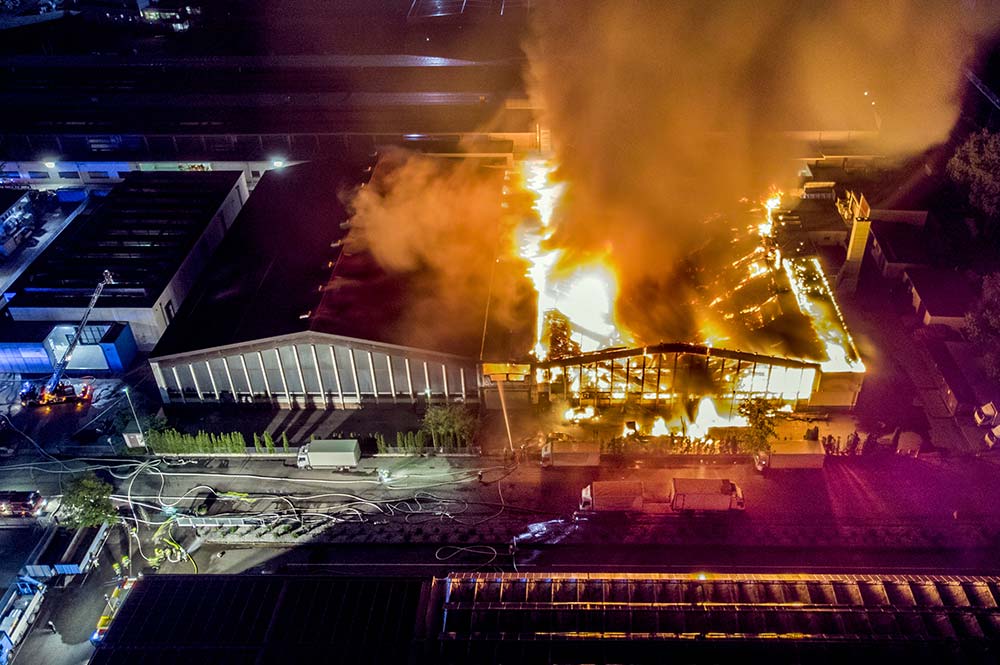
A serious fire occurred at the Property in 2011 destroying it and the plant and machinery it contained. Sartex was insured by Endurance Corporate Capital Limited (“Endurance”).
Endurance accepted liability for Sartex’s claim, but the parties disagreed as to the basis on which Sartex was entitled to indemnity. Specifically, Sartex claimed that it was entitled to the cost of reinstating the Property to the condition that it was in immediately before the fire, whereas Endurance argued that Sartex was only entitled to (significantly lower) sums representing the diminution in market value of the Property as a result of the fire.
The matter originally came before David Railton QC, sitting as a Deputy High Court Judge, in May 2019. He concluded that Sartex had a genuine intention to reinstate the Property, and that accordingly, reinstatement was the appropriate measure of indemnity. The Deputy Judge also rejected Endurance’s argument that there should be a discount for betterment.
The Appeal
Endurance appealed the decision on the basis that the Deputy Judge was wrong to assess damages on the reinstatement basis, when Sartex had not demonstrated a genuine intention to reinstate. In this regard, it asserted that Sartex’s ongoing failure to achieve reinstatement, 8 years after the fire, showed that it had no such intention.
Further, if Endurance failed on its primary case, it argued that the Deputy Judge was wrong not to make a deduction for betterment.
The Court’s decision
The measure of indemnity
Leggatt LJ observed that in indemnity insurance, damages were intended to put the insured in the same position it would have been in had the loss not occurred. What an insured actually intended to do with the damages was generally irrelevant.
There were two bases on which the court could award damages: (a) the cost of repair; or (b) the reduction in the market value of the property. Endurance argued that the latter applied, and relied on the decision in Great Lakes Reinsurance (UK) SE v Western Trading [2016] EWCA Civ 1003, in which a listed building was destroyed by a fire. Unusually in that case, the value of the property increased following the fire because its listed status was revoked, thereby improving its development potential. In Great Lakes, Clarke LJ commented that the basis of indemnity was “materially affected by the insured’s intentions in relation to the property”. He went on to say that “the insured’s intention need to be not only genuine, but also fixed and settled. And that what he intends must be at least something which there is a reasonable prospect of him bringing about (at any rate if the insurance money is paid)”.
The Court of Appeal in Sartex said that these comments did not assist Endurance. It was only in rare cases such as Great Lakes, where the property had gone up in value, that there was a need to demonstrate a fixed and settled intention to reinstate. No such issue arose in this case. Therefore, to put Sartex in an equivalent position as if the fire had not occurred, it was necessary to award it the cost of repairing the buildings and buying replacement plant and machinery.
Betterment
Endurance asserted that a percentage deduction should be applied to any award of damages, representing the alleged betterment arising from the replacement of the original building with modern materials. The Court of Appeal agreed that a deduction could, in principle, be made for savings if the building or the new machinery would have generated lower running costs; however, it was incumbent upon the insurer to identify and justify those savings. In this case, Endurance had made no attempt to do so, and simply advanced notional deductions for betterment that were unsupported by evidence. Therefore, absent any evidence, the Deputy Judge had been right to reject Endurance’s argument.
Implications of the decision
The decision in Sartex is good news for property owners, who, subject to any alternative provision in a policy, will not be required to show an intention to reinstate in order to recover on the reinstatement basis. The insured’s intentions will only be relevant in exceptional circumstances, which did not apply on the facts.
As to betterment, although property owners may, in some instances, be required to give credit for savings made as a result of reinstatement, the “blanket percentage” approach will be impermissible. A deduction will only be allowed where insurers can prove and quantify the lower running costs of the new building or the greater efficiency of the new plant and machinery.
Alex Rosenfield is a Senior Associate at Fenchurch Law


Unoccupied Buildings conditions – a trap for the unwary
Properties become unoccupied in a number of different scenarios. In a residential context, this might be because the home is not the policyholder’s main residence, or because the policyholder is going on an extended holiday. Similarly, for buy-to-let landlords, a property may become unoccupied for lengthy periods between tenancies.
This short article will explore the requirements that insurers impose where a property is left unoccupied, and how those requirements have been interpreted by the courts.
Home insurance
Standard home insurance policies exclude claims where properties are left unoccupied for extended periods. The rationale is simple: an unoccupied home represents a greater risk as it is more likely to attract thieves, vandals or squatters. Equally, there is a greater chance of structural damage in an unoccupied home because no one is available to deal with, say, a burst pipe or a fire. For those reasons, home insurance policies usually require policyholders to tell their insurers if the property is/becomes unoccupied.
“Unoccupied” is typically defined as: “not being lived in.” The case law suggests that this means actual use as a dwelling. So, in Simmonds v Cockell [1920] 1K.B. 843, a warranty requiring a property to always be occupied did not mean that there would always be someone present, but rather that it would be used as a dwelling house.
Most policies say that the cover will cease if the property is not being lived in “for more than [30] consecutive days” (although the precise number of days will vary from policy to policy). As long as the property is regularly being occupied, temporary unoccupancy will not invalidate the cover. Therefore, in the case of Winicofsky v Army & Navy General Assurance [1919], a condition requiring premises to remain “occupied” was not breached where the policyholder sought temporary refuge in a shelter during an air raid.
Once an insurer is told that a property is unoccupied, it will, if the change is accepted, be entitled to vary the premium and terms, and may raise a small administration charge for the variation. If the change is not accepted, the policyholder will need to arrange specialist unoccupied property insurance.
Commercial insurance
In commercial insurance, unoccupied buildings conditions take on a different character. Commercial policies usually impose a number of obligations, some of which may be quite onerous, which must be complied with if cover is to remain in force despite the property becoming unoccupied.
For example, landlords may be required to ensure that an unoccupied property, or a part of it, is inspected once a week (often with a requirement that a record of the inspection is kept), secured against illegal entry, kept free of combustible material, and disconnected from any mains services. The consequence of a failure to comply with the condition depends on whether it is expressed as a condition precedent to the insurer’s liability. If it is, the condition must be complied with absolutely, and any breach will entitle the insurer to deny liability for the claim. If it is not, the position will turn on whether the insurer has suffered prejudice.
A common scenario is that a property becomes unoccupied without the policyholder’s knowledge. This might occur in a landlord’s policy, where, say, a tenant vacates the property without giving notice. Commercial policies usually cater to that scenario by including “non-invalidation clauses”. These are terms which provide that cover will not be invalidated in the event of any act, omission or alteration which is either unknown to the policyholder or beyond its control. To gain the benefit of those clauses, the policyholder will be required to notify its insurer immediately of the act, omission or alteration.
Application of Section 11 of the Insurance Act
Section 11 of the Insurance Act is intended to prevent an insurer from disputing a claim for non-compliance with a term which is unconnected to the actual loss. The Law Commission has said that a causation test is not required; rather, the test is simply whether there is a possibility that the non-compliance could have increased the risk of loss.
Since Section 11 is capable of applying to Unoccupied Buildings conditions, how might it apply in this context?
Let us suppose that a landlord owns a property which has two floors, and the upper floor is unoccupied. A fire then starts on the ground floor, which spreads to the upper floor. Insurers then discover that the landlord breached the Unoccupied Buildings condition by failing to keep the building free of combustible materials, and refuse to pay the claim. There are not yet any authorities on the meaning and application of Section 11.
On an orthodox interpretation of section 11, it would not be open to the policyholder to argue the upper floor would have caught fire in any event, even if the condition had been complied with. However, on a non-orthodox interpretation, section 11 should arguably come to the policyholder’s rescue: the fire started on the ground floor, which was occupied, and compliance with the condition would not have made a difference to the loss.
Conclusion
Almost all property owners, whether acting as private homeowners or in a commercial context, will need to consider the implications of unoccupied buildings conditions at some point.
We would recommend that policyholders check the fine print of their policies in order to understand (a) when they need to notify their insurers if a property becomes unoccupied; and (b) the steps which need to be taken in order to comply with Unoccupied Buildings conditions. A failure to do so may be the difference between an insurer paying, or refusing to pay, a claim.
Alex Rosenfield is a Senior Associate at Fenchurch Law
Government to fund replacement of Grenfell-style cladding
Almost 2 years after the Grenfell Tower tragedy, the government has stepped in to speed up the removal and replacement of unsafe aluminium composite material cladding (“ACM cladding”) on privately owned, high-rise buildings. What are the implications for building owners?
On 9 May, the government announced its intention to make around £200m available to remove and replace ACM cladding from approximately 170 privately owned, high-rise buildings. The decision was driven by the slow pace by building owners to replace ACM cladding on their buildings, and the government’s view that ACM cladding represents an unparalleled fire risk.
Guidance on the Fund was published on 18 July. There are three eligibility criteria:
1. The Fund is available for the benefit of leaseholders in residential buildings over 18m in height;
2. Applicants will need to confirm that they are replacing cladding with materials of limited combustibility.
3. The government expects owners to actively pursue “all reasonable claims” against those involved in the original cladding installations, and to pursue warranty claims “where possible”.
Applications to the Fund can only be made by the “responsible entity”. This will usually be the building owner, head leaseholder, or Management Company with responsibility for the repair of the property. If a responsible entity does not apply or refuses to apply to the Fund, the Guidance states that local authorities and fire and rescue services are likely to take enforcement action under the Housing Act 2004.
What is a warranty claim?
Warranty claims refer to claims made under latent defect insurance policies. Those policies provide cover for newly built properties in the event of an inherent defect which was not capable of being discovered through inspection before completion.
Typically, latent defect policies are triggered in the event of (a) a non-compliance with the relevant Building Regulations which applied at the time of construction/conversion; and (b) which causes a present or imminent danger.
Unsafe ACM cladding which has been installed in high-rise residential blocks will meet those requirements.
What other claims might be available against those involved with the original cladding installations?
Those involved with the original cladding installations are likely to include Main Contractors, Architects, and specialist cladding subcontractors. The type of claims that can be brought against them will differ in each case, and will depend upon the nature of the relationships between the parties, and the specific work which was undertaken.
One route to making a recovery against those involved with the original cladding installation is under the Defective Premises Act 1972.
The Defective Premises Act imposes a duty on builders and any other professionals who take on work in connection with the provision of a dwelling. It requires the work to be done in a professional or workmanlike manner, with proper materials, and that the dwelling is for habitation when completed. The duty is owed to every person who acquires a legal or equitable interest in the dwelling.
Summary
The message from the government is clear. Responsible entities that are eligible to apply to the Fund must do so at the earliest possible juncture, and must pursue claims available under latent defect insurance policies as a pre-requisite to any funding.
The Guidance does not explain what a “reasonable claim” against those involved with a building’s original construction/conversion would look like, and this is likely to be assessed on a case by case basis.
Our recommendation is that building owners investigate the roles played by those parties, and the availability of any claims against them. Even where a party is no longer in business, there may be insurance cover that would still respond.
Alex Rosenfield is an associate at Fenchurch law
Young v Royal and Sun Alliance PLC
The Court of Session found that an insurer had not waived disclosure under the Insurance Act 2015 (“the Act”). The case is the first to be decided under the Act.
Background
A fire occurred at Mr Young’s property (“the Property”) causing extensive damage. Mr Young then claimed an indemnity from his insurers, Royal and Sun Alliance PLC (“RSA”).
RSA declined Mr Young’s claim on the basis that he had failed to disclose material information pursuant to section 3(1) of the Act. Mr Young denied making a material non-disclosure, and, in any event, argued that RSA had waived disclosure of that information, pursuant to section 3(5)(e) of the Act.
The Market Presentation
Mr Young’s insurance was arranged by his broker by way of a 20-page Market Presentation (“the Presentation”). The Presentation was completed using the broker’s software, and identified the insured as Mr Young and Kaim Park Investments Ltd (“Kaim”).
The “Details” section of the Presentation contained the following passage, which the judge referred to as the “Moral Hazard Declaration”:
“Select any of the following that apply to any proposer, director or partner of the Trade or Business or its Subsidiary Companies if they have ever, either personally or in any business capacity:”
The Moral Hazard Declaration required the proposer to select from seven options in a drop-down menu. The answer selected was “None”.
RSA emailed the broker on 24 April 2017 in response to the Presentation (“the Email”). The Email contained a heading titled “Subjectivity”, and stated as follows:
“Insured has never
Been declared bankrupt or insolvent
Had a liquidator appointed
…”
The Parties’ positions
RSA asserted that Mr Young failed to disclose that he had been a director of four insolvent companies (“the Insolvency Information”), and, had he done so, it would not have entered into the insurance “on any terms”.
Mr Young, in response, argued that the Presentation contained no misrepresentation, as neither he, Kaim, nor any director of Kaim had ever been insolvent. Further, by referring to “the insured” in the Email, Mr Young said that RSA had waived any entitlement to disclosure of prior insolvencies or bankruptcies experienced by anyone other than the insured themselves.
RSA denied that it had waived disclosure of the Insolvency Information, as the Email did not set out any questions for Mr Young to respond to. As a result, Mr Young’s failure to disclose the Insolvency Information was unconnected to the Email. Further, RSA said that it had no knowledge of Mr Young’s prior breach of the duty of fair presentation, and, since there must be knowledge of the right before it can be waived, there had been no waiver here.
The decision – was there a waiver?
The Judge firstly referred to the pre-Act case law, which established that an assured seeking to establish waiver would need to show a “clear case” (Doheny v New India Assurance Co Ltd [2005] Lloyd’s Rep I.R. 251). This could be done in one of two ways: (1) where an insured submitted information which contained something which would prompt a reasonably careful insurer to make further enquiries, but the insurer fails to do so; and (2) where an insurer asks a “limited” question such that a reasonable person would be justified in thinking that the insurer had no interest in knowing information falling outside the scope of the question. This case concerned the latter.
In considering the issue, the Judge noted that the term “any business capacity” was capable of including other entities with which the insured was involved. The difficulty for RSA, however, was that the Moral Hazard Declaration was incomplete; although RSA had seen the answer of “None”, it did not know what the “None” referred to.
The Judge held that the Email was aimed at clarifying Mr Young’s answer to the Moral Hazard Declaration, which it achieved by stipulating the specific moral hazards that needed to be addressed. Further, the judge held that the reference to “the insured” in the Email was not limited to Mr Young and Kaim, but also covered the longer formulation contained in the Moral Hazard Declaration. So, read in this context, the judge was satisfied that no reasonable reader would have understood the Email as waiving the part of the Moral Hazard Declaration relating to “any business capacity” in which Mr Young might have acted. Accordingly, the judge held that there was no waiver.
Comments
A number of themes arise in the judgment which are of relevance to policyholders and brokers.
Firstly, the judgment illustrates the potential drawbacks of using bespoke software to place insurance. Here, it was to Mr Young’s detriment that RSA were not using the same software as the broker, the result being that RSA were unable to determine the full extent of what was being disclosed, absent further information being provided.
The judgment also demonstrates that formulations such as “any business capacity”, may, in some circumstances, be broad enough to extend to any company with which an individual insured was involved. However, it is unclear whether that same analysis would apply where insurance is taken out by a business only.
Finally, although the judgment sheds light on what is required to establish waiver, it did not consider issues of materiality or inducement, and so the question of whether RSA can make good their assertion that it would not have written the risk “on any terms” remains to be decided.
Alex Rosenfield is a senior associate at Fenchurch Law.