

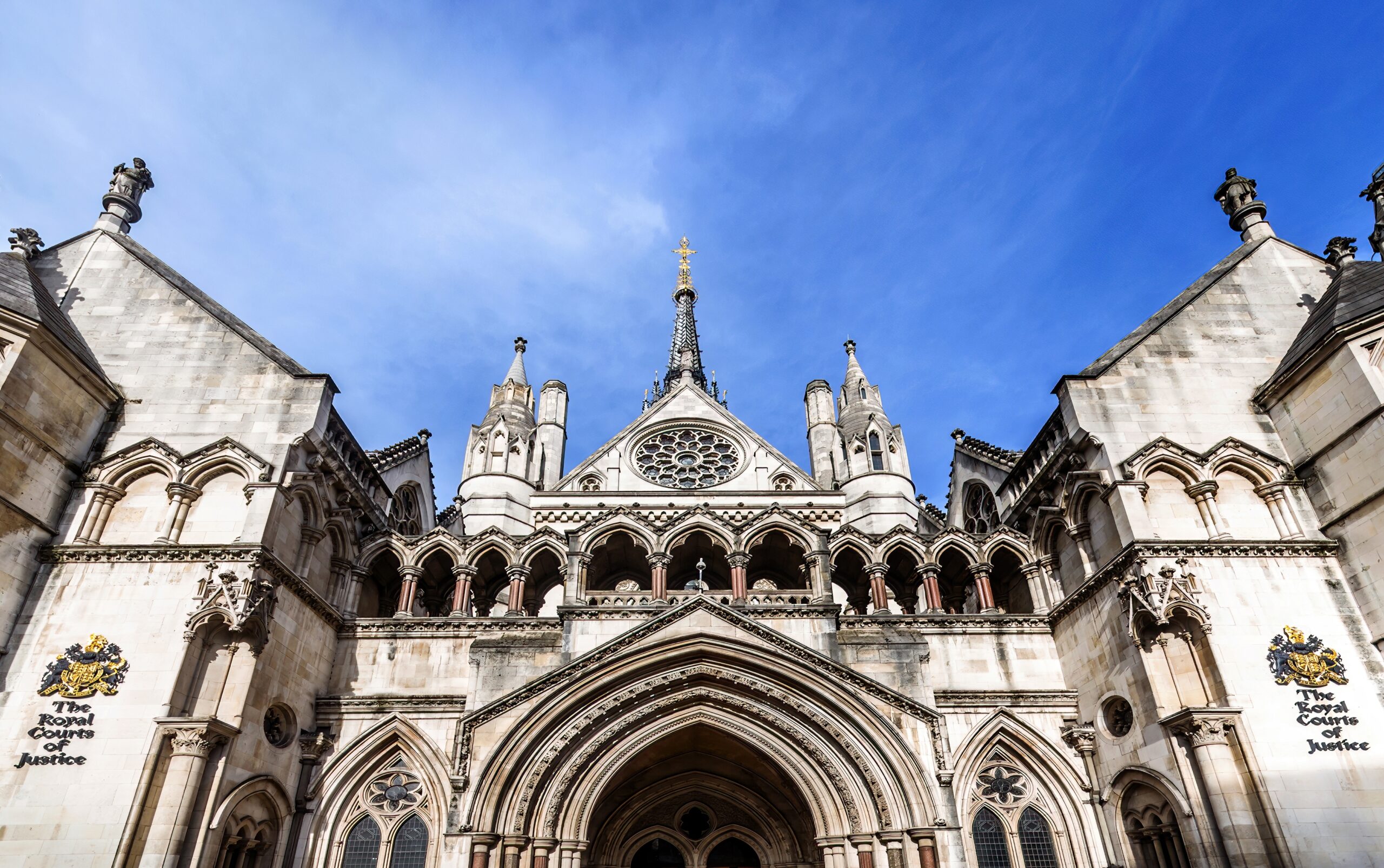
When can an insurer join the party? Managed Legal Solutions v Mr Darren Hanison (trading as Fortitude Law) and HDI Global Specialty SE [2025]
This recent High Court judgment sheds light on the circumstances under which an insurer may be joined as a party to underlying liability proceedings. The case explores the nuanced question of when, and in what situations, an insurer is deemed to have “an interest” in a liability dispute, and carries significant implications for claims brought under the Third Parties (Rights Against Insurers) Act 2010 (“the TPRAI”).
Background
Managed Legal Solutions Limited (“MLS”), a litigation funder, commenced proceedings against Darren Hanison trading t/a Fortitude Law (“Mr Haninson”) in 2021 seeking damages (“the Liability Proceedings”).
Although Mr Hanison initially defended the Liability Proceedings in their entirety, including an allegation that he owed MLS an independent tortious duty (“the Tortious Duty”), he was debarred from defending them from 1 November 2024, having failed to comply with an Unless Order.
Separately, HDI Global Specialty SE (“HDI”), which provided Mr Hanison with professional indemnity insurance with a limit of £2m, initiated confidential arbitration proceedings against Mr Hanison in relation to coverage (“the Arbitration”).
As the Arbitration was unresolved at the time of the current application, HDI had an interest in the outcome of the Liability Proceedings. That interest was particularly acute given the risk that Mr Hanison could become bankrupt if he lost the Liability Proceedings, thus triggering an automatic transfer of his rights under the insurance policy to MLS under the TP(RAI) 2010. Accordingly, HDI applied under CPR 19.2 to be added as a second defendant to the Liability Proceedings.
The central argument advanced by HDI was a conflict-of-interest point. While it was in Mr Hanison interest for the Tortious Duty to be established, since that would enable him to pursue an indemnity from HDI – HDI had a clear interest in demonstrating that no such duty existed, as that would absolve them of any obligation to indemnity Mr Hanison. In light of this inherent conflict, HDI argued that its joinder to the Liability Proceedings was necessary to safeguard its interests.
The application
Did CPR 19.2 apply?
MLS opposed the application, contending that the relevant rule was, in fact, CPR 19.6. That provision addresses the substitution or addition of parties after the limitation period has expired, which, according to MLS, was the case here because the limitation period for the alleged Tortious Duty claim had already lapsed.
HDI, however, argued that the relevant claim was only a potential future claim by MLS against it under the TP(RAI) 2010, because that claim was contingent on Mr Hanison becoming bankrupt. On that basis, the limitation period had not expired (and strictly speaking had not even commenced).
The Court agreed with HDI. It concluded that the claim in the Liability Proceedings was not time-barred and that HDI’s joinder did not amount to a “change of parties”. Rather, it would simply permit it to make submissions in relation to the Liability Proceedings. Accordingly, the only question for the Court to decide was whether the requirements of CPR 19.2 were satisfied.
CPR 19.2
CPR 19.2 provides that a Court may permit the addition of a new party where either: (a) it is desirable to do so to enable the Court to resolve all matters in dispute within the proceedings; or (b) there exists an issue involving the new party and an existing party connected to the matters in dispute, such that it is desirable to add the new party to resolve that issue.
The Court accepted that there was “an issue” involving HDI and relied on several authorities, notably Wood v Perfection Travel [1996], which established that it may be appropriate, in certain cases, to add an insurer to liability proceedings and allow them to make submissions.
The Court was also satisfied that the ‘desirability’ threshold was made out. Given that Mr Hanison had been debarred from defending the Liability Proceedings, the Tortious Duty claim was effectively uncontested. The Court therefore found it ‘desirable’ for HDI to be added, unless there were compelling factors to the contrary.
In the Court’s view, no such factors existed. Although MLS argued that the application was delayed, pointing out that the Tortious Duty issue had been ‘in play’ since October 2023 (HDI’s application, by contrast, was made in June 2025), the Court found that the decisive trigger was Mr Hanison being debarred from defending the Liability Proceedings. Until that point, Mr Hanison had maintained his defence. As it was no longer possible for him to do so, it was necessary for HDI to be joined to the Liability Proceedings to protect its interests.
MLS further contended that joining HDI would place it in a more advantageous position than its insured, since Mr Hanison had already been debarred from defending the claim. The Court, however, was not persuaded by that argument. It recognised that HDI had its own distinct interest in the Tortious Duty claim and, if it were not permitted to participate, it would be exposed to the risk of providing an indemnity for an uncontested liability.
Comment
This case raises several noteworthy issues, particularly in relation to the TP(RAI) 2010. While HDI’s application was not itself a TP(RAI) 2010 claim, it was clearly made with the prospect of such a claim in mind.
In this context, it could be argued that permitting an insurer to find itself in a more advantageous position than its insured is out of step with the TP(RAI) 2010 given that, conversely, recent decisions under the TP(RAI) 2010 make it clear that a claimant’s rights are no better than those of an insolvent insured in whose shoes they stand. See, in particular, Makin v QBE and Archer v Riverstone.
That said, it is perhaps unsurprising that HDI was so determined to safeguard its interests. Without the opportunity to participate in the Liability Proceedings, HDI faced the prospect of an uncontested claim against its insured, and a subsequent judgment, which, following Makin v QBE, it would likely be unable to challenge.
This case also brings into focus a vexed issue facing insureds who are required to defend liability claims on one hand, while pursuing claims for indemnity from their insurers on the other. Notably, an insured will usually seek to deny liability in proceedings brought against them, yet, paradoxically, must establish that liability in order to secure an indemnity from their insurer.
MLS has been granted permission to appeal, so its opposition to HDI’s joinder will now be considered by the Court of Appeal. Watch this space.
Alex Rosenfield is a Partner at Fenchurch Law.
Other news

The Iran War: Property and Business Interruption Insurance Implications for Policyholders
The ongoing Middle East conflict has significant implications for many insurance issues facing policyholders. In the…
You may also be interested in: